In lane Book Reviews
Jennifer Swanson on Curiosity, Fieldwork and Refusing to Quit
Description
Jennifer Swanson talks about co-writing an invention atlas for kids, turning a rainforest survey into nonfiction, and why persistence matters in publishing.

Jennifer Swanson's advice to writers is blunt: be bold, and never, never, never give up. Her two recent nonfiction titles show where that stubbornness pays off. One is a playful tour of human ingenuity. The other is a close look at a rainforest survey. Both aim at curious young readers, and both reward the kind of patient attention she says she values most.
Inventing the world, one path at a time
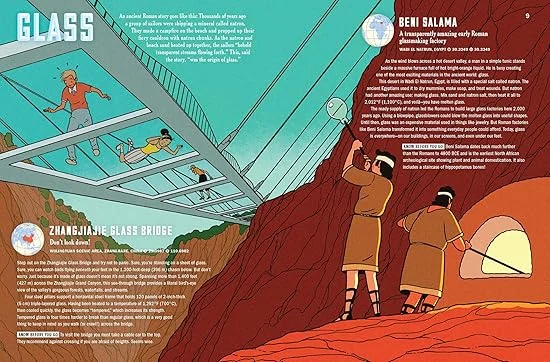
The Atlas Obscura Explorer's Guide to Inventing the World, co-written with Dylan Thuras and illustrated by Ruby Fresson, comes from Workman Kids, part of Hachette Book Group. Thuras had the original idea. He cofounded Atlas Obscura, which Swanson describes as an adult travel company that is so much more. She says the partnership worked because both of them are curious and creative, and she enjoyed working out the invention paths with him.

The Atlas Obscura connection shapes the structure. Because the series centers on places you can visit, the inventions double as a loose travel itinerary. Swanson laughs that the book could fund a long vacation around the globe. Choosing just 100 was the hard part. Picking a famous telescope meant choosing the Vera Rubin Observatory, partly because it was just coming online and spotlights a well-known female STEM scientist.
The format is the real hook. Instead of a timeline, the book follows invention paths. A single lens, for instance, can end up in glasses, a telescope or a microscope. Swanson's point is that invention rarely runs in a straight line, and one breakthrough can spawn five or ten others. She hopes that realization pushes readers past learning facts and toward inventing something of their own. The book has earned a starred review from School Library Journal, which you can read at School Library Journal.
From a museum exhibit to a rainforest book
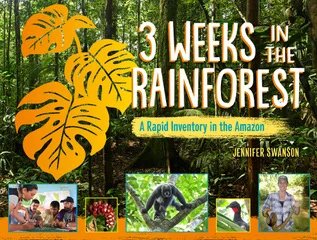
The second book, 3 Weeks in the Rainforest: A Rapid Inventory in the Amazon from Charlesbridge Publishing, started somewhere unexpected. In fall 2018, Swanson was visiting her daughter in Chicago, who was interning at her college for the summer. The pair stopped at The Field Museum, where an exhibit on the Rapid Inventory Project stopped Swanson in her tracks. A short video about the expedition hooked her. The vivid images and the scientists' conservation work made the Amazon feel present.

What stayed with her most was the detail of the work. Researchers counted every animal they saw, collected samples and took a full biological inventory of the area. She was especially struck that the social scientists worked to include local communities and Indigenous Peoples in their reports. In her view, people who live in a place should have a real say in how it's set up as protected land, and the expedition's approach showed that.
Keeping the fieldwork in the reader's boots
Swanson's solution to explaining science without flattening the excitement was perspective. She wrote the book so readers feel they're in the field alongside the scientists, experiencing a small slice of their days. The photographs spread through the book reinforce that sense of place.
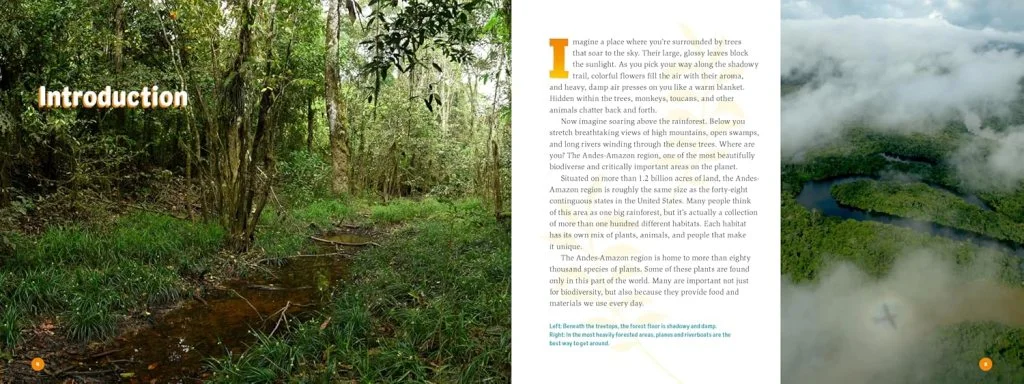


Deciding what to explain and what to leave for readers is mostly a question of what grabs a kid. Swanson keeps the exciting, slightly gross material. She asked ichthyologist Dr. Lesley de Souza whether researchers have to worry about anacondas when wading into unfamiliar Amazon rivers. The answer: "Yes. But they aren't a problem. Just don't let them get too far up your leg." Swanson's reasoning is simple: science is fun when it's also creepy or gross. She admits plenty else had to be cut, because the book would have run too long. The 3 Weeks title also earned a starred review from Kirkus, available at Kirkus Reviews.
Reading, childhood and the advice she keeps repeating
Swanson names Forest World by Margarita Engle, BOMB! by Steve Sheinkin, Poop Happened!: A History of the World from the Bottom Up by Sarah Albee and Robert Leighton, and Your Place in the Universe by Jason Chin as nonfiction books that shaped her. As a child, she devoured every Nancy Drew mystery and leaned on a science reference book for her science club.
Her advice comes from years of teaching. She tells every student in her Highlights Nonfiction course to be bold, to meet people at conferences and to take chances when they show up. Then she repeats the part she considers most important: never give up, especially in today's unpredictable publishing climate.

Swanson holds a B.S. in chemistry from the U.S. Naval Academy and an M.S.Ed. in K-8 science from Walden University. She spent more than fifteen years as a middle school science teacher before becoming a full-time author, TEDx speaker, podcaster and science communicator. She has spoken at several Smithsonian institutions and the World Science Festival. Originally from Central Illinois, she now lives in Jacksonville, Florida. Her website is jenniferswansonbooks.com, and her TEDx talk is on YouTube.
For readers who want to see where her curiosity leads next, the throughline is clear. Swanson writes nonfiction that treats kids as explorers, whether they're tracing an invention through five centuries or wading into a river with a scientist. That's a good reason to hand these books to a child who's always asking how things work.