In lane Book Reviews
E. Reyes Reopens Camp Ketchum for a Slasher Night Built on Old-School Dread
Description
E. Reyes's The Murders at Camp Ketchum leans on classic slasher bones, a 1996 Arizona setting and a masked killer. The reviewer gave it 8.5/10.
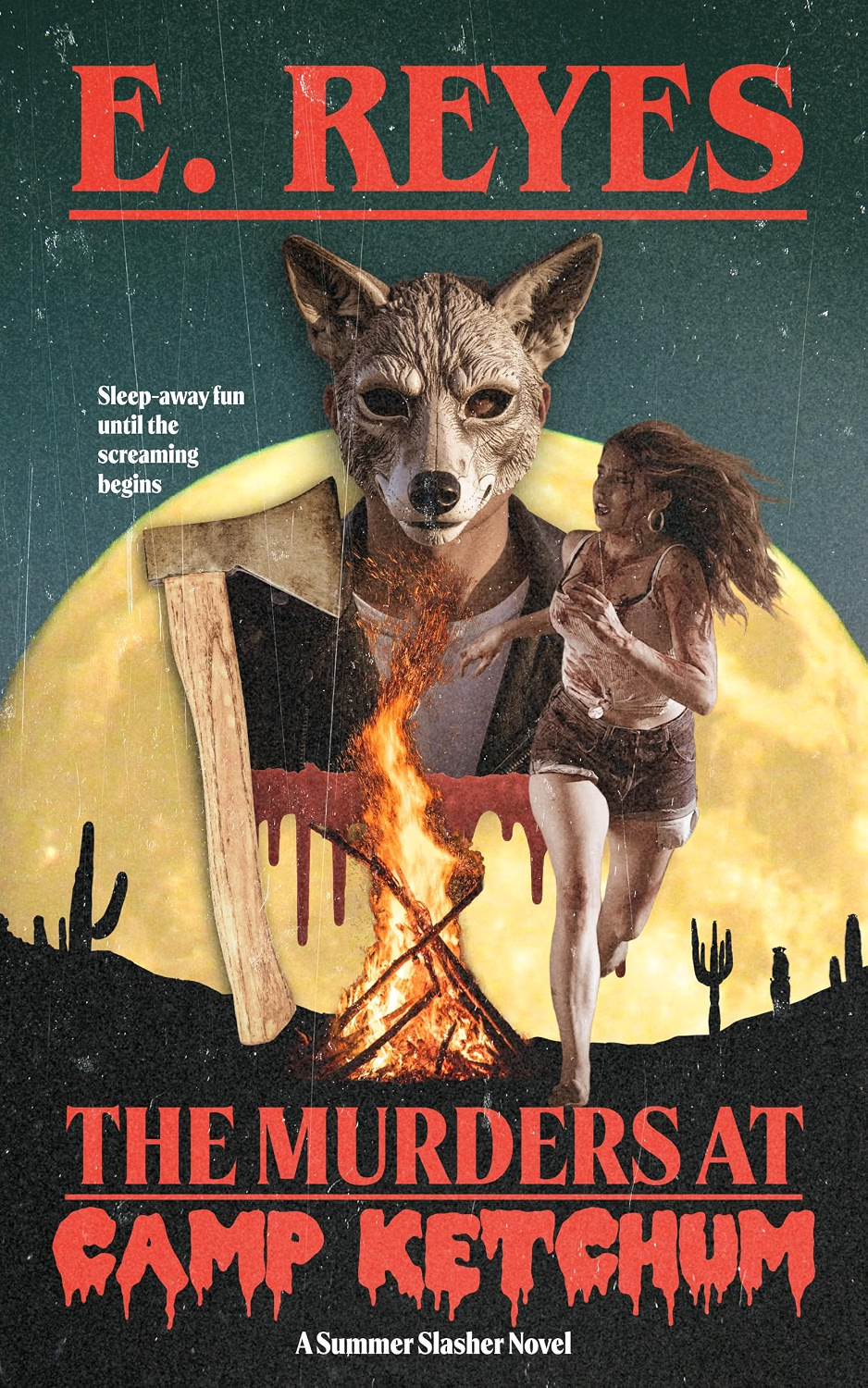
Some places are better left alone, and Camp Ketchum is a textbook example. E. Reyes's The Murders at Camp Ketchum takes a shuttered summer camp in the Arizona desert and asks what happens when a group of teenagers decides it's a good idea to break in anyway. The reviewer rated it 8.5/10, and the reasons behind that score say a lot about what this book does well.

A party with the wrong guest list
The setup is simple, and that's the point. Set in Tucson in 1996, the story follows Luna and her friends as they sneak into a camp that has been closed for a year. The gates are rusted, the cabins are rotting, and the desert has nearly reclaimed the grounds. A nephew of the owner provides the way in, which makes the trip feel almost too easy. Slasher stories often run on that sort of unease: the sense that the shortcut was a trap all along.
Reyes builds the threat around Rafe Ramon, known across Arizona as the Night Valley Snake. The reviewer describes him as a thief, a killer and something worse, a man who has pledged himself to the devil and who treats a bloodbath as a plan rather than an accident. Rafe's trail runs cold in the Tucson Mountains, and the camp is where it leads. Without phones or signal, the teens have no easy way out, and the reviewer notes that the night quickly turns from a party into something far grimmer.
Why the old formula still works
The reviewer's central point is that Reyes understands what made early slashers stick. Those films were built from a handful of reliable pieces: a mask, drinking teenagers, cabin sneak-aways in the middle of a party, a gruesome backstory and the nagging question of who, if anyone, will make it to morning. Reyes, by the reviewer's account, assembles all of them without making the book feel like a checklist.

The comparisons offered are useful for readers deciding whether this is their kind of horror. The reviewer found a blend of In a Violent Nature and Friday the 13th at work here, and the 1996 setting adds a specific texture. Rafe, in the reviewer's reading, is proof that a certain strain of Satanic Panic lingered into the decade, and that paranoia gives the story an extra layer of menace beyond the body count.
Setting a slasher in the 1990s is a smart move for a practical reason too. Pre-smartphone stories naturally cut characters off from help, so the isolation at Camp Ketchum doesn't need elaborate workarounds. Phones are absent, signal is absent, and the characters have to rely on instinct and each other. That tends to make the dread feel earned rather than convenient.
Connective tissue for longtime readers
The reviewer has read several of Reyes's books and noticed how his fictional geography keeps resurfacing. The areas surrounding the author's Devil's Hill bleed into one another, and small details, a name drop or a remembered news headline, tie stories together. The reviewer caught a nod to After the Pink Moon this time, which was a small pleasure for someone who has been following the author's work.

That shared universe is a real draw for series readers, but it's also worth knowing that the reviewer found each book works on its own terms. Reyes moves between sub-genres, and the reviewer says the books never feel interchangeable, even when they share a world. The tone shifts, yet each one commits to the particular vibe it's chasing. For a writer, that balance between continuity and reinvention is worth studying.
Kills, a mask and a franchise hook
The gore is a clear strength. The reviewer praises the kills as inventive and brutal, and notes that Rafe feels larger than life while still being a man who can be knocked down. That tension is what gives slasher sequels their hook. The reviewer compares it to the earlier Friday the 13th films, where a bad beating never seemed to settle the matter, and to Michael Myers, who might be left for dead only to vanish when someone looks back.
That lingering threat is also why the reviewer thinks the book sets up a sequel. The ending, as described here, leaves plenty of room to return to the camp or to Rafe. The reviewer jokes about franchise potential, and it's hard to argue against the instinct. The reviewer also draws a parallel to McAuley's Candy Cain, which suggests readers who enjoy that kind of recurring menace will feel at home.
Who this one is for
The reviewer's verdict is direct: this is a perfect read for horror fans, a strong pick for spooky season and an especially good fit for slasher devotees. Readers who want gritty, mask-wearing menace with a nostalgic bent will probably get the most out of it. Those who prefer their horror more psychological may find the pace and the body count more than they bargained for.
What stands out is how confidently the book trusts its formula. It doesn't apologize for being a slasher, and it doesn't wink at the audience too often. Reyes seems to know exactly what his readers came for, and the reviewer thinks he delivers it. If the next installment arrives, the camp may stay closed for a while, but the reviewer clearly expects it to be worth reopening.