In lane Book Reviews
The Fires of December: Brandon Sanderson Writing Like He's Having Fun
Description
Brandon Sanderson's The Fires of December is witty, playful and gorgeously illustrated, though its pacing wobbles. Here's why it's worth your time.
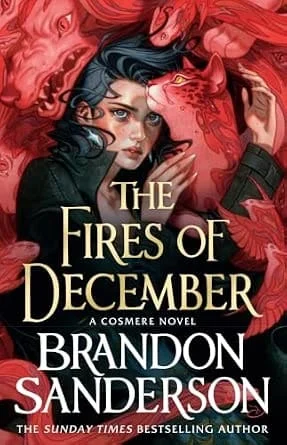
Brandon Sanderson's latest is a book that seems to have enjoyed its own making, and that mood carries over to the reader. After a stretch of books that didn't quite land for one reviewer, The Fires of December brought back the qualities that made Sanderson's work so appealing in the first place: inventive worldbuilding, sharp humour and characters who feel like people rather than plot devices.

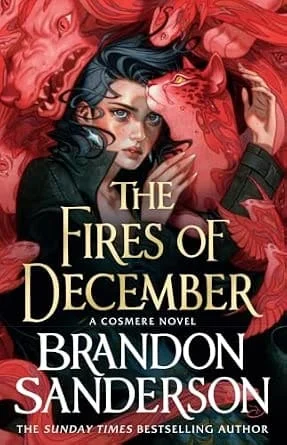

A kingdom built on colourful blood
The setting is a forgotten land sustained by rivers of demon blood, each one a different colour. Into this world comes December, a foundling with no family and a place in society that others have already decided for her. She has spent her youth trying to fit the roles handed to her. Then a transformative experience gives her knowledge of a cataclysmic plague, one that will curdle those blood rivers and tear the kingdom apart.
The obvious problem is credibility. Who listens to a poor woman from a small riverbank town? December's answer is to sail up the River Violet and warn the king's court herself. Along the way she meets a chatty priestess and a fledgling fashion designer, and she has to get past royal officials who don't want to hear her, court intrigue, and a roguish count who may be the key to her quest, and possibly to her heart.
Why December works
The reviewer's favourite thing about the book is its heroine. December never sits neatly in a box, and the novel makes a point of showing how exhausting it is to mould yourself around other people's expectations. She is stubborn, bold about what she believes in and smart enough to accept help when she needs it. She isn't a lone genius who refuses assistance, and that makes her easier to root for.
Sanderson also gives her a narrative voice with plenty of personality. The story is told by Hoid, who is witty, self-aware and happy to break the fourth wall. That lets the book move between levity and real darkness without feeling jarring. One of the reviewer's favourite passages has the narrator asking, in effect, where he was during all of this, and answering that he was having a nice soup. It's a small joke, but it captures the tone well.
Most importantly… where the hell was I in all of this? I appreciate your concern. At that moment, I was having a nice soup.
There's a line elsewhere, set off in parentheses, about novels being more dangerous than readers assume. The narrator suggests that spending time inside other people's perspectives can leave you with empathy, understanding and an appreciation for the serial comma. Whether or not you agree with the sentiment, it fits a book that asks its readers to see the world through someone unlike themselves.
Strengths and sore spots
The supporting cast gets a lot of praise. There's a talking cat demon, a romance with a considerable age gap, good friends and a spiritual advisor who, in the reviewer's words, is very talkative. Those elements give the book warmth and humour, and they keep the political machinations of the court from becoming too heavy.
The art also earns real enthusiasm. The reviewer spent minutes studying each coloured illustration, which they felt matched Sanderson's descriptions and the palette of this world. If you pick up a physical edition, the visuals are a big part of the appeal.
The weak points are structure and ending. The reviewer found the pacing disjointed, though they noted that a story built around time travel might be expected to feel that way. That's the one trope they say they dislike most, and they felt the ending took an easy way out. That's a single reader's view, and it's the element most likely to divide people who go into the book expecting a tidy resolution.
Where it sits in Sanderson's catalogue
For readers hunting for something similar, the reviewer compares the book to Yumi and the Nightmare Painter and Tress of the Emerald Sea. Both share a playful tone and a sense of imaginative escape that the reviewer associates with this novel.
It can be read as a standalone, which is good news for newcomers. But longtime readers will spot a lot of allusions to the wider Cosmere, which the reviewer describes as many, many Easter eggs. Those nods reward anyone who has followed Sanderson's larger universe, though they don't block entry for people who haven't.
Who should pick it up
If you want a fantasy novel that treats its heroine's stubbornness as a strength, and a narrator who cracks jokes while the world ends, this is a strong pick. Readers who need tight plotting or a neatly satisfying finish may find the pacing and ending frustrating. My read is that the book's charm comes from its voice and its characters, and that's what most readers will remember.