In lane Publishing Industry
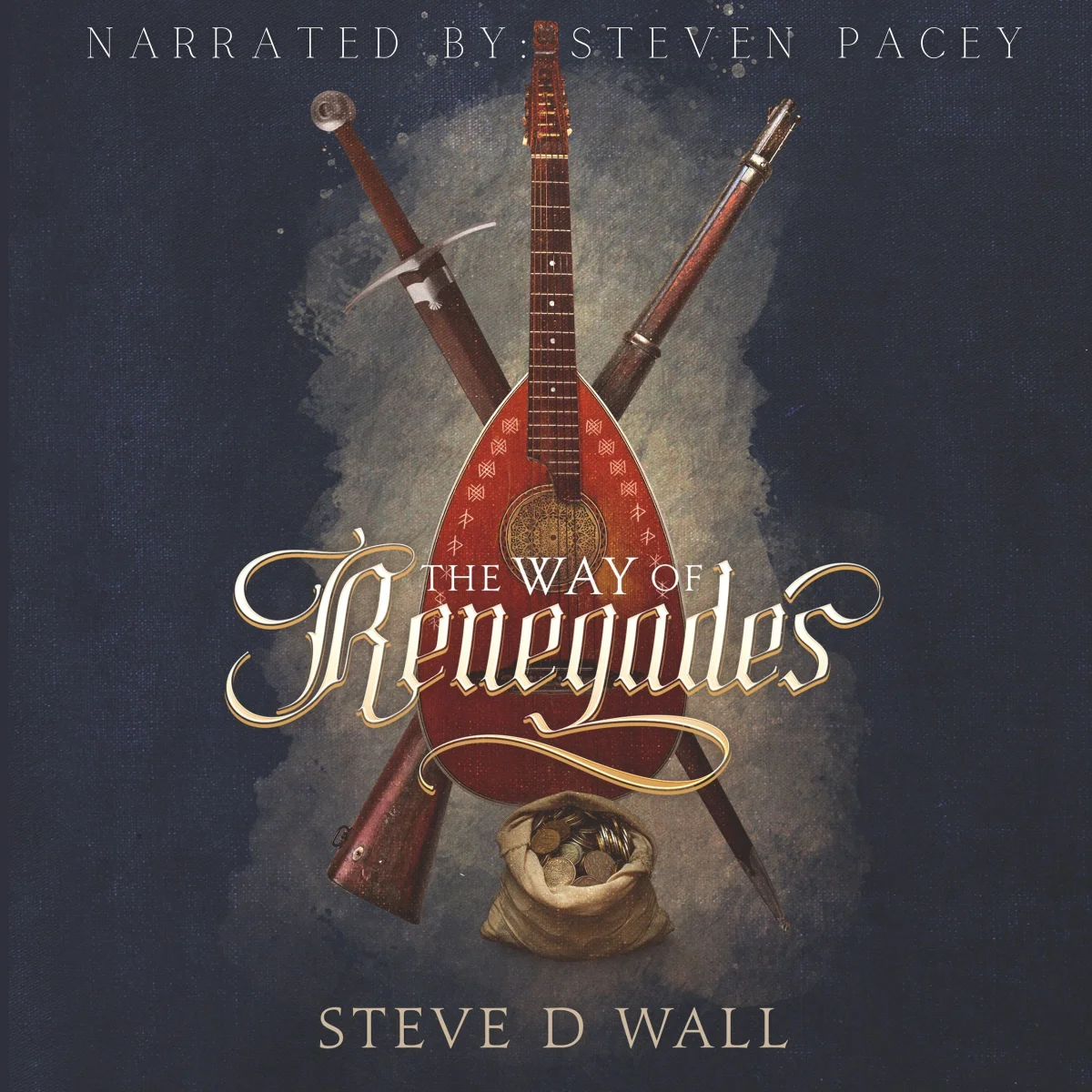
The Way of Renegades: Flintlocks, Bards and a Colonial Reckoning
Description
Steve D Wall's flintlock debut blends muskets, bardic sorcery and dragons into a character-driven story of colonial tension. Here's who it suits.
A flintlock fantasy with more on its mind than action
Steve D Wall's The Way of Renegades arrived in 2023 as the first volume of The Bards & Dragons Saga, and it's the kind of debut that rewards readers who like their adventure with some friction. The pitch is straightforward: guns, mages, bards and dragons, set in a frontier world where new technology is changing who holds power. The execution is more interesting than the pitch suggests.

Three threads and a sorcerer in the wings
The novel follows three main characters whose paths gradually converge. Ulric is a former war hero living in exile in the frontier city of Quinport, hoping to stay hidden from his past. When he learns of a revolutionary new rifle, and when the Coalition of established world powers discovers who he is, his quiet life collapses. He needs money and allies before he can leave, and that need drives much of his storyline.
Dellioph is a bard who has just arrived in Quinport and wants only to play his music and keep his secrets. Neither goal stays easy. He's drawn into the orbit of a Coalition Chancellor who wants to use both his talents and his secrets, and he has to decide what he's willing to give up.

Gali is the future chief of the Odagna people. She wants to protect her people even if that means pushing them to change, so she defies her father, deceives her own tribe and travels to the Coalition city to learn how to make and use muskets. The Coalition isn't ready to accept her people, and the lessons she learns come the hard way. Meanwhile, two strangers from opposite ends of the world hunt a sorcerer of enormous power and appetite, along with the dragons that tie into his ambitions. The reviewer noted that these dragons are nothing like the ones in familiar stories, which is one of the book's quieter pleasures.
Colonialism handled with care
The story is set shortly after the Coalition finds the land of Teo, and the parallels to the early European colonisation of America are deliberate. That's a risky template. Handled clumsily, it can flatten native characters into props or preach at the reader. The reviewer felt Wall avoided both traps. The Coalition is driven by profit and expansion, and the book doesn't soften what that costs the Teo tribes.

What makes the conflict bite is the technology gap. The Teo can't meet the Coalition's rifles on equal terms, and the novel keeps asking what that means for their way of life. Do they fight and lose, or adapt and risk losing their identity? Here's the thing: Wall doesn't hand over an answer, and that refusal is what gives the central dilemma its weight.
Multiple viewpoints and a world that feels lived in
The multi-viewpoint structure lets Wall show how colonists and Teo see the same events differently. The reviewer singled out Gali's sections as both heartbreaking and believable, particularly the way she and her companions struggle with a society that treats them as outsiders. The narration matters here, too. Steven Pacey voices the large cast with a range of accents and distinct character work, and the reviewer described the audiobook as an excellent production. Pacey's résumé includes work for Joe Abercrombie, Robert Harris, Susan Hill and Joanne Harris, and that experience shows in how cleanly the voices separate.

Quinport is a strong piece of worldbuilding. It's a crossroads for people from many lands, each with its own history, religion and internal rivalries. Wall releases this information at a steady pace, so the city feels real without drowning the reader in detail. The Coalition itself is less unified than its name implies. Its chancellors are ambitious, and they undercut each other as readily as they deal with outsiders. The reviewer also praised the magic system, especially the way music drives spellwork, and suggested that readers who enjoy Patrick Rothfuss will find plenty here.
Where it falls short
The reviewer's main reservation is the ending. The closing scenes build to a memorable finale, but they don't deliver a clear conclusion by the final page. Series readers expect open threads, and the reviewer accepted that. Still, the book felt as though it stopped mid-action. That's a fair complaint, and it may bother some readers more than others. The reviewer's own response was telling: they went straight on to the next book.
Who it's for
My read is that The Way of Renegades suits readers who like flintlock fantasy, character-driven plots and a moral landscape with no obvious heroes or villains. The reviewer pointed out that, with one exception, nobody here is simply good or bad. Everyone is trying to get by. Pair that with a rating of 8.0/10 and a strong audiobook, and you have a debut that's worth a listen or a read, especially if you want a series that's still building momentum. Watch for the next volume to pick up where this one leaves off.