In lane Book Reviews
Wildwood Review: Laika’s Stop-Motion Fantasy Balances Wonder and Darker Themes
Description
Laika’s Wildwood pairs tactile stop-motion, a sibling rescue and dark fantasy, though its rushed ending leaves some of its magic unexplained.
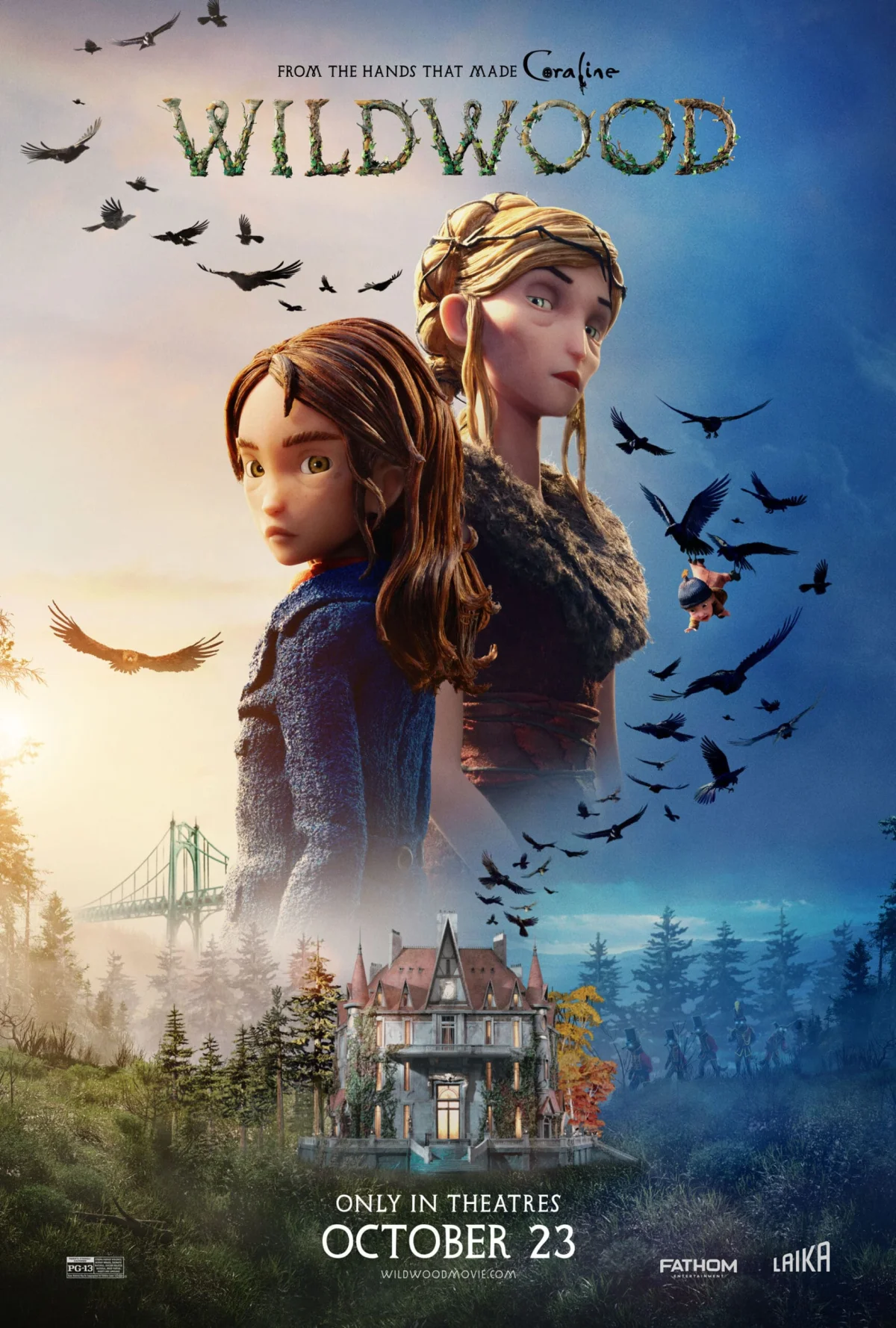
Laika’s Wildwood is a dark, sprawling fantasy built around a simple, affecting motive: a teenager will risk nearly anything to bring her little brother home. The film surrounds that rescue with talking animals, divided woodland kingdoms and a conflict that grows far beyond its heroine’s first glimpse of the woods. Its stop-motion craft gives the world a vivid, hand-built presence, while its violence and grief make it a more unsettling watch than its storybook premise might suggest.
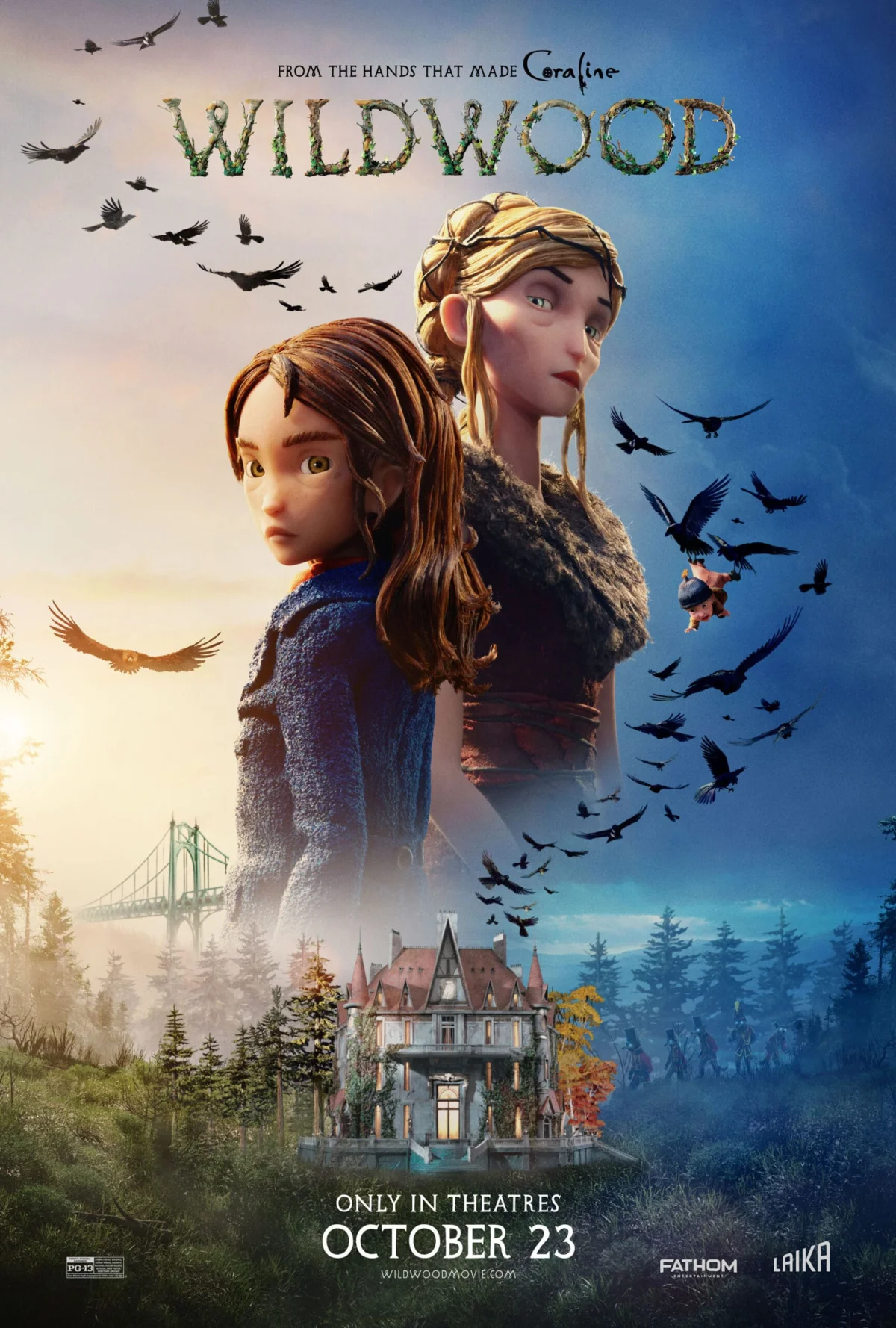
The reviewer rates the film 9/10 and calls it a personal favorite of the year. That enthusiasm comes with reservations: some character turns and transitions near the end feel hurried, and the film raises questions about its magic without answering them. Still, its visual imagination, emotional center and willingness to let quiet moments speak make a strong case for seeing it on its own terms—and staying through the credits.

A rescue story rooted in sibling devotion
Prue McKeel, voiced by Peyton Elizabeth Lee, sets out after her infant brother Mac is carried off by crows into the Impassable Wilderness, an enchanted forest beyond Portland, Oregon. Her classmate Curtis Mehlberg, voiced by Jacob Tremblay, joins the search. He’s loyal, eager to help and often slow to read the danger around him. Together, the pair enters a place of talking animals, bandits and rival powers, where a personal rescue becomes bound up with the future of the woods.
The film is based on the middle-grade novel by Colin Meloy, lead singer of the Decemberists. The reviewer went in knowing little about the plot and initially assumed the movie was aimed at children. A warning beforehand prompted a rethink: the story has a childlike sense of wonder, but its imagery and violence take it into much darker territory. That mix is central to the film’s appeal and its challenge for families deciding whether it suits younger viewers.
Prue’s bond with Mac gives the adventure its emotional clarity. The reviewer appreciates that the older sister isn’t written as resentful of a much younger sibling. Her love for him is immediate and deep, so her decision to enter the forbidden woods feels less like a conventional quest than a response to an urgent family loss. The film keeps returning to a question that applies to several of its characters: how far should someone go for the people they love?
Before the abduction, Prue takes Mac out despite her parents’ firm rule that he must stay inside. She meets Curtis, and the three head to a park. The crows’ arrival turns a city outing into the event that pulls the children into Wildwood. The reviewer finds the rule puzzling because the parents’ reasons aren’t made clear to Prue or the audience. That missing explanation becomes one of several questions about the family’s past and the limits of their knowledge.
Portland and a hand-built forest
Laika’s version of Portland gives the film a distinctive starting point. The reviewer, who has never visited the city but knows Portlandia, finds familiar cultural touches in its colorful presentation. More than that, Oregon’s lush setting feels well suited to a tale where ordinary geography gives way to the uncanny. Backgrounds and details across the film suggest careful, sustained work; the city and the forest feel like places with their own texture, not scenery waiting for the characters to pass through.
Once Prue and Curtis cross into the woods, the film opens onto a fantasy society of separate territories, animal inhabitants and competing loyalties. The reviewer sees echoes of a darker Narnia in its talking creatures, shadowed rulers and struggle between opposing forces, but the movie’s handmade landscapes and animal cast give the journey its own character. There’s a lot packed into its two hours and 12 minutes. Its scale can feel crowded, yet the many distinct places and minor figures also make the woods seem larger than the children’s immediate route through them.
The first pursuers are coyote soldiers in red coats. Their uniforms call to the reviewer’s mind the troops of the American Revolutionary War era, while the coyotes’ role recalls the wolves serving the White Witch in Narnia. The choice of coyotes rather than wolves helps make the hostile force feel specific to this world. The crows, too, quickly prove dangerous, complicating the idea that the forest’s animal communities can be trusted as a group.
Two children caught in different dangers
Prue and Curtis are separated while trying to escape the coyotes. Curtis is captured; Prue finds help from a mailman, who carries her through the woods toward the Governor of the South Wood. Her route exposes her to the damage and fear left by conflict between the forest’s inhabitants. Bandits are blamed for the destruction, and their reputation hangs over the journey before Prue knows what to make of it.
Among the more memorable figures she encounters is the General, a giant golden eagle voiced by Angela Bassett. The reviewer singles out the character as a favorite among the many supporting players, and sees the breadth of the cast as part of the film’s ambition. Prue reaches Pittock Mansion, transformed from its earlier appearance into a place of formal meetings populated by people and talking animals. She asks the Governor for help, but he proves weak and his assistant manipulative; instead of aid, Prue is imprisoned for being an outsider.
A sparrow named Ember helps Prue escape and points her toward Owl Rex, the bird kingdom’s crown prince, voiced by Richard E. Grant. The reviewer finds him pompous rather than sagacious, which makes him a less reassuring guide than his title might imply. Prue’s attempt to learn what is happening and find Mac is interrupted by the Governor’s people. Owl Rex is arrested, and Prue escapes with the General.
The resulting flight is one of the film’s most striking sequences. Prue rides the eagle through the air as they evade coyotes and crows, and the reviewer briefly thinks of eagles carrying characters to Mordor. The sequence makes the detail in Laika’s animation especially apparent; the reviewer read that more than 3,000 individual feathers were created for the eagle. The escape turns abruptly tragic when an arrow strikes the General, who dies on screen. The reviewer describes an audible gasp at the moment. Its shock reinforces the film’s sense that beauty and safety don’t always go together.
Curtis’s captivity takes him to the Warren, where Dowager Countess Alexandra tends to him and calls him Alexei—the name of her dead son. Curtis fails to recognize what that means. So does he miss the warnings of Septima, a rat voiced by Awkwafina. His trusting nature can make him frustrating to watch, the reviewer admits, but it also gives his story room to change. When Alexandra dresses him as a coyote soldier and brings him to the front line, Curtis sees her cruelty firsthand. She orders him to kill a wounded man; he refuses.
Alexandra’s treatment of Curtis is unsettlingly divided. She can be ruthless toward her enemies while showing him a confused, intimate tenderness because she sees something of her son in him. That tension becomes easier to understand after Owl Rex tells Prue what happened. Alexei died in an accident, and his body was never found. After her husband’s death, Alexandra used dark magic to create a mechanical child carrying her son’s essence. When that child understood what he was and took his own life, Alexandra’s grief tipped into madness. The people of the woods exiled her to their outskirts.
Prue learns that Owl Rex witnessed these events. He suggests seeking the mystics, whose connection with the woods may help her locate Mac. The plan collapses when the Governor’s forces find them, sending Prue back into danger and Owl Rex into custody. The revelation turns Alexandra’s pursuit of Mac into more than a straightforward contest for power: she is trying to recover a child she lost, with terrible consequences for the living children in her reach.
Spoilers: bargains, grief and the ivy
The next developments explain why the crows took Mac and connect Prue’s family to Alexandra’s past. In the reviewer’s account, Prue’s parents made a bargain with a witch beneath a bridge: they could have a child, but would owe their second-born. The deal has the shape of a Rumpelstiltskin tale. The witch appears near a Portland farmers market, a bit of local flavor the reviewer finds amusing. The revelation also recasts the parents’ strict rule about Mac, though the film leaves the full history of their agreement unclear.
Prue’s parents had expected to have only one child and apparently believed the bargain would never apply to them. Alexandra is the figure they met on the bridge between the two worlds. The reviewer wonders how much people outside Wildwood know about the magic beyond it, how Alexandra crossed the ivy, and where the witch’s bell came from. The film offers hints, including books Prue’s father shares, but doesn’t settle these questions. The reviewer suspects Alexandra may have been disguised as the witch; the movie doesn’t confirm that possibility.
Alexandra’s plan is to sacrifice a magically born infant to the ivy that surrounds the woods. She hopes to control it and discover where Alexei’s bones lie, so she can bring him back through magic. Earlier scenes show that the plants respond to Prue’s blood, though she doesn’t understand the significance at first. The ivy is introduced as a barrier whose failure worries the forest’s inhabitants. The later reveal makes it a source of the damage spreading through the woods, its growth overwhelming places like the ruined Bandit Camp.
Alexandra exploits Prue’s desperation by telling her Mac is dead. She suggests Prue should return home and let her parents grieve, and Prue does go back without Curtis. The reviewer isn’t sure how much time has passed by then, or whether time moves differently inside the woods. The film doesn’t make that clear. At home, Prue tells her parents what she believes happened. They don’t blame her for the trouble, and other characters have already pointed out that the woods’ problems began before she arrived. In the reviewer’s view, that choice gives Prue room to take responsibility for her actions without making her the cause of a conflict she didn’t create.
The conversation with her parents draws a distinction between letting go and giving up. Prue is angry to learn about the bargain, and her parents’ explanation doesn’t erase the harm it has caused. She decides to return to the woods, this time driven by hope that Mac can still be saved. The reviewer sees a useful contrast with Alexandra: both are acting from love and loss, but Alexandra has let grief consume her, while Prue can still choose another path.
The film also invites questions about how the family sees Mac and Prue. The reviewer notices that Mac’s complexion resembles Alexandra’s more than his parents’, while Prue shares her father’s small birthmark beneath her left eye. Could the visual choices imply that Mac is Alexandra’s child? The reviewer raises the possibility but can’t say whether it’s intentional; the movie doesn’t explain it. The parents’ apparent readiness to accept Mac’s fate sits uneasily beside Prue’s resolve, and that ambiguity strengthens the story’s interest in what different parents will risk for a child.
A forest community prepares to fight
Prue and Curtis reunite as events move toward a fight over the ivy. Curtis escapes with the bandits and returns to their camp. Prue seeks out the mystics in the Ancient’s Grove, where the reviewer finds a calmer, more grounded way of life: people and animals live alongside the land, gathered around a sacred tree on a hill. One of the mystics was present at Alexandra’s exile, tying the grove’s inhabitants to the history Prue is trying to understand.
When Prue touches the tree, her blood activates it and brings her a vision of what may come. The peaceful community must then gather what it can and prepare to defend itself, shifting the grove into something like the village in Seven Samurai. The moment makes Prue’s connection to the forest tangible, but it also underscores one of the reviewer’s concerns: the film never explains the limits or source of her power. Characters who can sense magic don’t tell her what they see, leaving the ability to feel more like a device the story uses when it needs one.
Even as Alexandra’s forces advance, the movie finds room for uneasy humor. She soothes Mac by making faces, a tender gesture at odds with the harm she’s prepared to cause. Then she tells him, “No, that’s Mommy’s sacrificial knife, it’s dangerous!” The reviewer finds the line funny and disturbing at once. Alexandra can be gentle with a baby and still be willing to sacrifice him; her affection doesn’t undo the danger she poses.
“Whatever it takes” becomes a refrain shared by Alexandra and Prue’s parents. For the reviewer, it captures two kinds of parental response: the willingness to accept a loss when it can’t be undone, and the insistence on recovering a loved one at any cost. The McKeels’ original bargain complicates their later acceptance of Mac’s fate, while Prue’s return shows that she isn’t ready to stop searching. The film leaves the moral weight of those choices open enough to think about after the adventure moves on.
The final battle and its costs
The last stretch brings the bandits and the Ancient’s Grove together against Alexandra’s army, which is heading for the ivy’s taproot on a plinth. The reviewer calls the climactic battle one of the movie’s most impressive sequences, with a scale that almost makes it easy to forget the images were made through stop-motion. There’s also little softening of the violence. The battlefield includes gunshots, arrows, crows pecking out eyes, decapitations, coyote attacks, stabbings and deaths in a fire fed by spilled tar. For the reviewer, the brutality makes the cost of the conflict impossible to overlook.
Curtis’s growth is tested there, and Septima’s death is another moment that lands hard for the reviewer. Prue pursues Alexandra to the plinth and tries to keep her from killing Mac. She activates the ivy again, unleashing it across the ruins. In the end, Alexandra is consumed by the plant and never seen again. Prue calms the ivy and saves her brother; the coyotes, left without their leader, scatter. The immediate danger passes, though the victory comes with losses the film doesn’t attempt to hide.
The reviewer would have welcomed a more restorative ending for Alexandra. Prue might have helped the ivy return Alexei to a place where he could be buried, or brought Alexandra’s body to wherever her son’s remains were. That reunion never happens. Its absence leaves Alexandra’s story painfully unresolved, even as the surviving characters move toward safety.
The final departure feels rushed to the reviewer. Prue and Curtis leave the people who helped them without a fuller goodbye or an escort to the edge of the woods. The film also leaves open how long the children have been away, how much time has passed since Alexandra’s exile, whether Mac shares Prue’s power and what her magic might mean for her future. The setting has guns, cars and electricity, but no clearly defined era; the reviewer allows that this uncertainty may be part of its charm.
Craft, music and who should watch
For all those unanswered questions, the film’s strongest scenes often need no explanation. The reviewer praises moments where movement and expression carry the story in place of dialogue. That confidence in visual storytelling suits stop-motion, where a gesture or a carefully composed background can hold the viewer’s attention. The movie feels like a tribute to tactile animation and the human creativity behind it.
The score is another highlight. The reviewer hears a hint of Game of Thrones in the main theme before it moves toward a Studio Ghibli feeling. Composer Dario Marianelli also scored Kubo and the Two Strings, another stop-motion film the reviewer loves and identifies as another Travis Knight film. The recommendation is to stay through the credits, where the music and craft are still part of the experience.
Viewers who want a light, uncomplicated children’s adventure may find Wildwood harsher than expected. Its sibling bond and talking animals sit alongside grief, frightening imagery and substantial on-screen violence. The source review doesn’t make a specific age recommendation, but its account makes clear that parents may want to consider that contrast before choosing it for younger viewers. For adults and older children who enjoy fantasy that lets wonder and danger occupy the same frame, the film offers plenty to discuss.
The reviewer’s 9/10 reflects a movie whose handmade world and emotional ambition outweigh its loose ends. Its conclusion hurries past some goodbyes, and Prue’s magic remains hazy, but the central question—what love can demand, and when determination becomes destructive—gives the adventure a lasting shape. Wildwood is an inviting choice for viewers ready to follow a rescue into a strange, beautiful forest, provided they’re prepared for the darkness among its wonders.