In lane Book Reviews
Tyler Jones’s Depth Charge Turns Visions of Death into Intimate Horror
Description
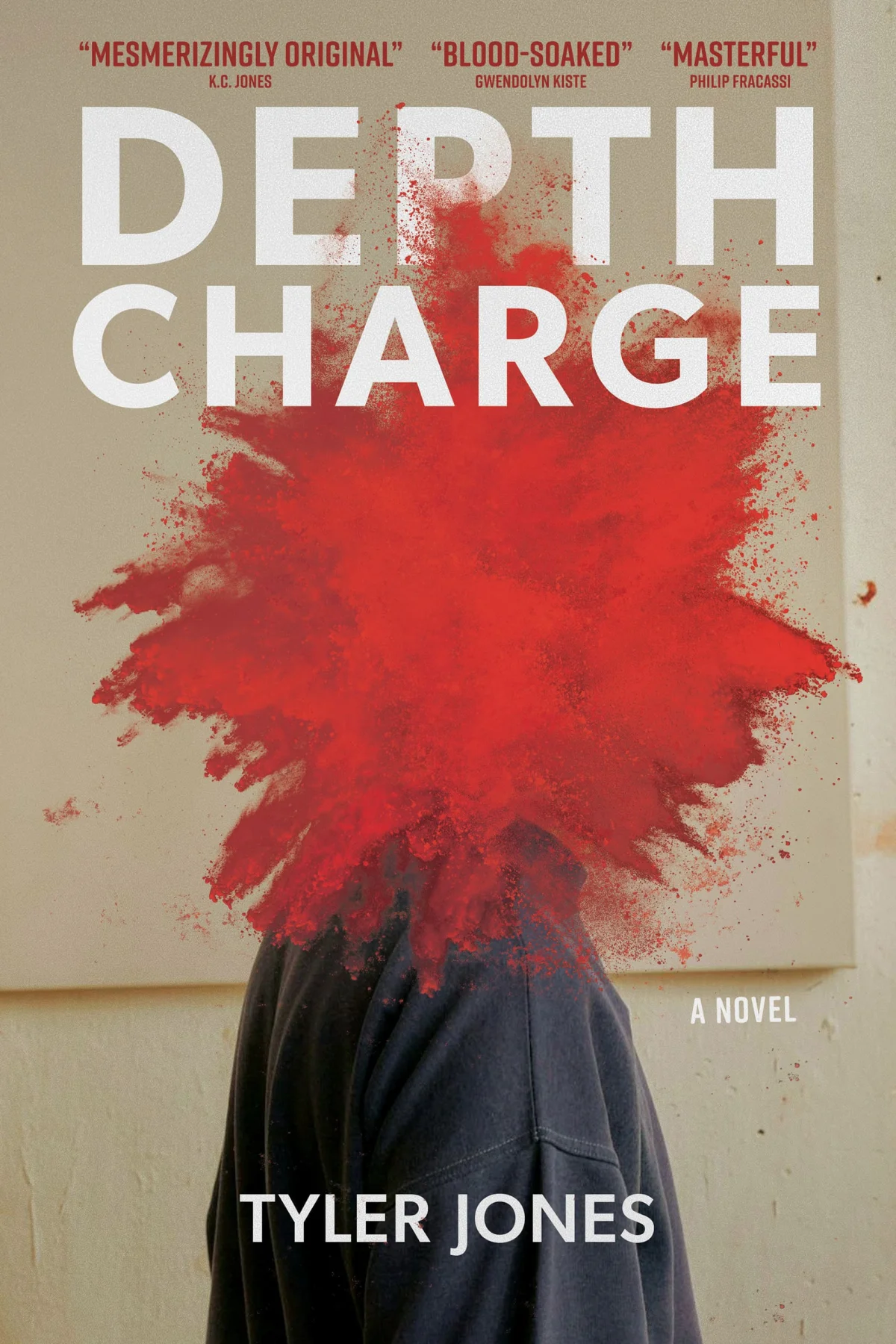
Tyler Jones’s Depth Charge pairs blood-painted visions of disaster with sharp questions about fate, responsibility and the bonds that sustain us.
Rating: 9.5/10





A gift that feels like a curse
Julian Le Sang paints with his own blood, and what appears on the canvas offers him glimpses of future deaths. Tyler Jones builds Depth Charge around that gruesome premise, then asks the harder question: what responsibility comes with seeing suffering before it happens?
As a fifth grader, Julian is isolated and bullied until Marcy befriends him. Their first encounter is unsettling: he asks whether she can see anything grim in his blood. Julian already knows he can. The visions that emerge are not vague premonitions but images of looming atrocities, and they prove eerily accurate.
Years later, Julian has become an admired artist, though he keeps his ability quiet. Marcy is raising her son, Alex, alone. When Julian’s visions draw the two of them into secret programs, murder and a future threatening catastrophe, their long-standing connection becomes part of a much larger struggle. The novel’s premise promises high-stakes horror; its real force comes from the people caught inside it.
Fate, choice and the cost of looking
Jones gives Julian’s talent weight beyond its shock value. If he can glimpse a terrible outcome, should he try to stop it? Could intervention save lives, or would it mean imposing his own judgment on events he can’t fully understand? The book knows these questions have a long history in supernatural fiction, yet makes them feel immediate by keeping the possible consequences personal.
There’s another burden in being made to witness what others may never see. Julian’s visions are grotesque, haunting images of death and destruction. The reviewer connects that experience to the unwanted material a person can stumble across online: knowledge that stays with you, whether or not you asked for it. If Julian’s suffering might spare someone else’s, is that enough to make it worthwhile? Does the capacity to help create an obligation to try, even when success is uncertain?
Depth Charge doesn’t reduce those dilemmas to an easy moral lesson. Its central ability feels less like a gift than a curse, and the reviewer is drawn to the tension between compassion and the unfair demands placed on someone who has the means—however limited—to help.
Big ideas, close relationships
The book ranges across fate, mortality and the branching paths created by individual choices. Julian’s visions give those ideas a vivid, unsettling form. Still, the reviewer’s strongest praise is for the relationships at the story’s center. Marcy, Alex and Julian aren’t simply pieces in a mechanism built to bring on disaster; their care for one another supplies the warmth that makes the danger hurt.
That intimacy also shapes the novel’s account of hope. Jones doesn’t offer comfort by pretending time is generous or loss can be avoided. The characters live with the knowledge that life is finite, while the book insists that tenderness and human connection matter all the same. The reviewer finds hope in that clear-eyed belief, rather than in a sugary promise that everything will turn out well.
The shifts in tone are part of the appeal. The reviewer compares the book’s structure to songs that move through sharply different sections and somehow make them cohere. Here, avant-garde horror about art and responsibility sits beside a supernatural coming-of-age story, a devastating road trip and a tense conspiracy. Those elements could pull apart; Jones makes them build on one another.
Writing that leaves a mark
The reviewer, who last read Jones’s Midas as an advance copy in mid 2023, praises the author’s prose as much as the novel’s design. Descriptions of blood are simultaneously repulsive and arrestingly beautiful, while the passages depicting destruction carry their own visual power. That collision suits a story about art made from something so intimate and visceral.
The pacing feels assured, even to a reviewer who says they would gladly have read another 300 pages. That’s telling: at once propulsive and emotionally demanding, the book holds attention through its changing modes without losing sight of its characters. The reviewer describes it as riveting and intelligent, a story that stirred grief, tears and unsettled thoughts well after reading.
Depth Charge is out November 10th from Shortwave. The reviewer awards it 9.5/10 and calls it one of the best books they’ve read in recent memory. For readers who want horror with emotional depth, moral uncertainty and a belief in the value of loving people while we can, Jones’s novel makes a compelling case for giving Julian’s visions your full attention.