In lane Publishing Industry
Review: The Trial of Magdalena Overmorrow Blends Low Fantasy with a Fierce Feminist Voice
Description
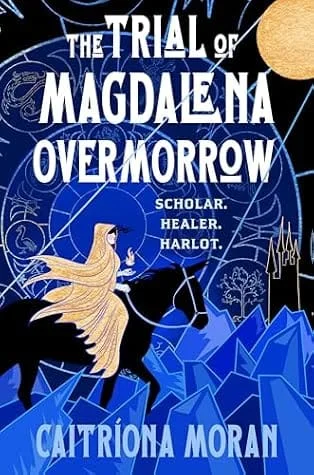
Caitríona Moran’s fantasy follows a healer awaiting trial in a northern stronghold; its vivid heroine and themes stand out, though the pacing and ending falter.
Rating: /10


A healer sent north
Magdalena Overmorrow is a magician, scholar, healer and midwife who helps women obtain abortions using herbal remedies and magic. In the kingdom of Astoleyn, that work is illegal. After someone betrays her, Magda is arrested and charged as a witch and heretic, accusations that could lead to death at the stake.
Rather than face her trial at once, she is sent to Cair Gramora, a remote northern stronghold where she must wait under the supervision of its Lord Proctor. Magda expects him to be an old, grim priest. Instead, she meets a man not much older than she is, whose reserve and hidden complications give their encounters a slow-burn tension. The mountains and isolation around the cair give the story a confined, watchful atmosphere: Magda’s freedom is limited, and the person overseeing her fate remains difficult to read.
The setup gives the novel a clear source of pressure. Magda needs to keep out of trouble long enough to earn a pardon, but the cair has its own intrigues, and she is not built to keep her head down. Her curiosity and convictions draw her into the lives around her, while the question of what the Lord Proctor will decide hangs over her stay.
A forceful heroine, and a story with something to say
The novel has the feel of historical fiction filtered through a low-fantasy world. Its strongest presence is Magda herself: stubborn, quick-minded and guided by a strong sense of honour. She doesn’t simply endure the people and customs around her; she shifts how others see and respond to them. That force of character gives the book much of its momentum, especially when the plot pauses to let her speak her mind.
“Sexual lust and bloodlust,” Magda continues, “may spring from the same source, but that doesn’t make it admirable. If men want to be beasts, they should be treated like beasts. Put them to pasture in fair weather and shut them in a barn at night.”
That sharpness suits a story openly engaged with questions of women’s bodily autonomy and control over their choices. The reviewer reads the novel as an angry lament about the state of gender and choice debates, and that anger is clearest in Magda’s refusal to soften her position for other people’s comfort. Friendship and feminism are central to the book’s appeal, with romance threaded through the story rather than carrying it.
There’s wit alongside the anger. When the Lord Proctor asks, “Are all women in the capital as impertinent as you?”, Magda answers, “Only the ones sent north for apostasy.” Their exchanges suggest a lively friction, while the reviewer also enjoyed hints of the Lord Proctor’s personal conflict. The romance is slow to develop, though, and for this reviewer the glimpses of intimacy don’t add up to a satisfying arc.
Where the pacing loses its grip
The most persistent difficulty is the structure. Time jumps interrupt the feeling of living alongside Magda, sometimes moving past stretches that seem to call for more attention. The reviewer found that especially noticeable in the second half, where abrupt transitions made it seem as if a section of the advance reading copy might be missing. Even when a jump serves the wider plot, it can leave emotional developments feeling underprepared.
That looseness also affects the ending. The reviewer found it lacklustre after the build-up and the book’s sustained development of feminist themes. It points toward an interesting sequel, but that promise doesn’t fully resolve the sense that the present story could have brought its threads together with greater purpose. The desire for more consistent character development is part of the same concern: Magda’s voice remains compelling, but the story’s movement doesn’t always give her growth the space it needs.
Readers who enjoy morally defiant heroines, remote fantasy settings and stories that place women’s agency at the centre may find a lot to engage with here. The reviewer recommends it to fans of The Once and Future Witches by Alix E Harrow and Juliet Marillier’s The Sevenwaters books. My read is that Magda’s forceful presence and the novel’s clear convictions will stay with those readers, even as the uneven pacing and underwhelming finish make the journey less cohesive than its premise promises.