In lane Publishing Industry
Review: Cello’s Gate Launches Maurice Africh’s Sky Pirate Adventure
Description
Maurice Africh’s Cello’s Gate pairs a mythic treasure hunt with a secretive crew whose lively dynamics power this fast, vividly imagined adventure.
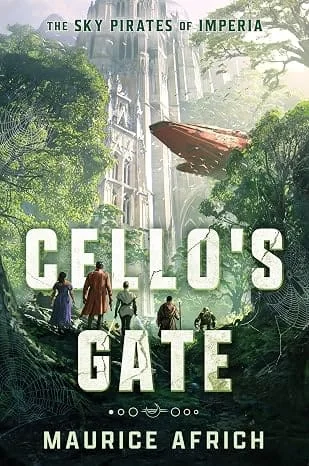
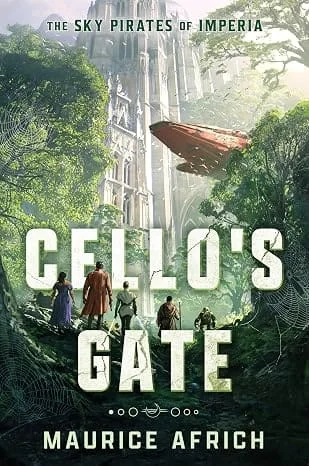
In Cello’s Gate, Maurice Africh gives a familiar treasure-hunt premise a lively crew to carry it: Captain Grey and his sky pirates are asked to pursue seven fabled stones, each said to hold godlike power. The reviewer’s strongest impression is of a story that plays like an animated adventure, full of quick movement, colorful personalities and secrets that keep the journey unsettled.


A job built on a legend
Grey and his crew have made their name by pulling off jobs others would consider impossible. After one especially harrowing heist, they’re approached by Dalia, the immortal daughter of the infamous ArchGovernor. She wants them to find the Stones of Indigo, seven legendary rocks that promise immense power. The reward is striking: one million credits for each crew member for every stone they recover.
The first leg of the search points toward an uncharted island. An ancient map offers a route, but a mysterious guardian stands between the crew and their prize. There’s a catch larger than the dangers of the journey, though: the stones may not exist at all. They could be nothing more than a story passed among young pirates, a comforting promise that effort can lead to wealth and influence.
That uncertainty gives the expedition a useful tension. Grey’s crew must decide how much to trust a client who may be concealing the truth, while also weighing whether a legendary prize is worth risking their lives. The reviewer describes Dalia as someone Grey distrusts from the outset, and says she is hiding something with potentially deadly consequences. The setup leaves the crew chasing a prize whose value and reality are both in question.
A crew with plenty of friction
The book’s central pleasure, in the reviewer’s account, is the way Grey’s crew works as a group. They have each other’s backs, but that loyalty doesn’t mean they’ve shared everything. The reviewer calls them a found family held at a distance: a close-knit team with room for secrets, competing instincts and individual histories. That tension suits a story in which trust is as important as finding the right route or outsmarting a guardian.
The crew brings a varied set of skills and experiences to the job. There’s a fighter shaped by enslavement, a scholar who works as a doctor, a husband-and-wife team who fly and maintain the ship, and a legendary knight. Their contrasting backgrounds give the group a range of ways to respond to danger, and the reviewer finds that the characters’ separate perspectives are interesting enough to follow beyond their scenes together.
Grey himself sounds like the kind of captain who can turn a difficult situation into a more dangerous one through sheer nerve. The reviewer says he’s prone to foolish acts of bravery. That trait can make for an entertaining, impulsive lead, especially when the people around him have to manage the consequences. It also gives the crew’s loyalty something to push against: sticking together doesn’t stop them from seeing Grey’s choices differently.
Fast pace, with room to grow
The reviewer found the writing and plot addictive, praising the brisk pace and the way new information arrives. The dialogue doesn’t always land; some exchanges struck the reviewer as awkward. Even so, the momentum and well-spaced revelations kept the story moving. For readers who enjoy an adventure that keeps changing the shape of the problem, that balance may be part of its appeal.
There’s less space, the reviewer suggests, for the full depth of every character. The group’s individual viewpoints add texture, but the book’s page length leaves some inner conflicts waiting to be explored. The reviewer also read several characters as neurodivergent and welcomed those traits, while feeling that quirks sometimes carry more weight than the characters’ deeper struggles. They hope the sequels will give those conflicts more room.
That’s a clear sense of what the series might build on: a strong ensemble, a playful adventure engine and characters whose contradictions deserve further attention. The reviewer’s comparison points are Chris Wooding’s Retribution Falls and a Han Solo-style hero, offering a useful signal for readers drawn to roguish crews and high-spirited journeys. Cello’s Gate appears best suited to readers who want a fast-moving sky-pirate story with an ensemble at its heart—and who are happy to leave some character questions open for what comes next.