In lane Book Reviews
Annie Neugebauer’s The Spare Turns Family Camping Into Uncanny Horror
Description
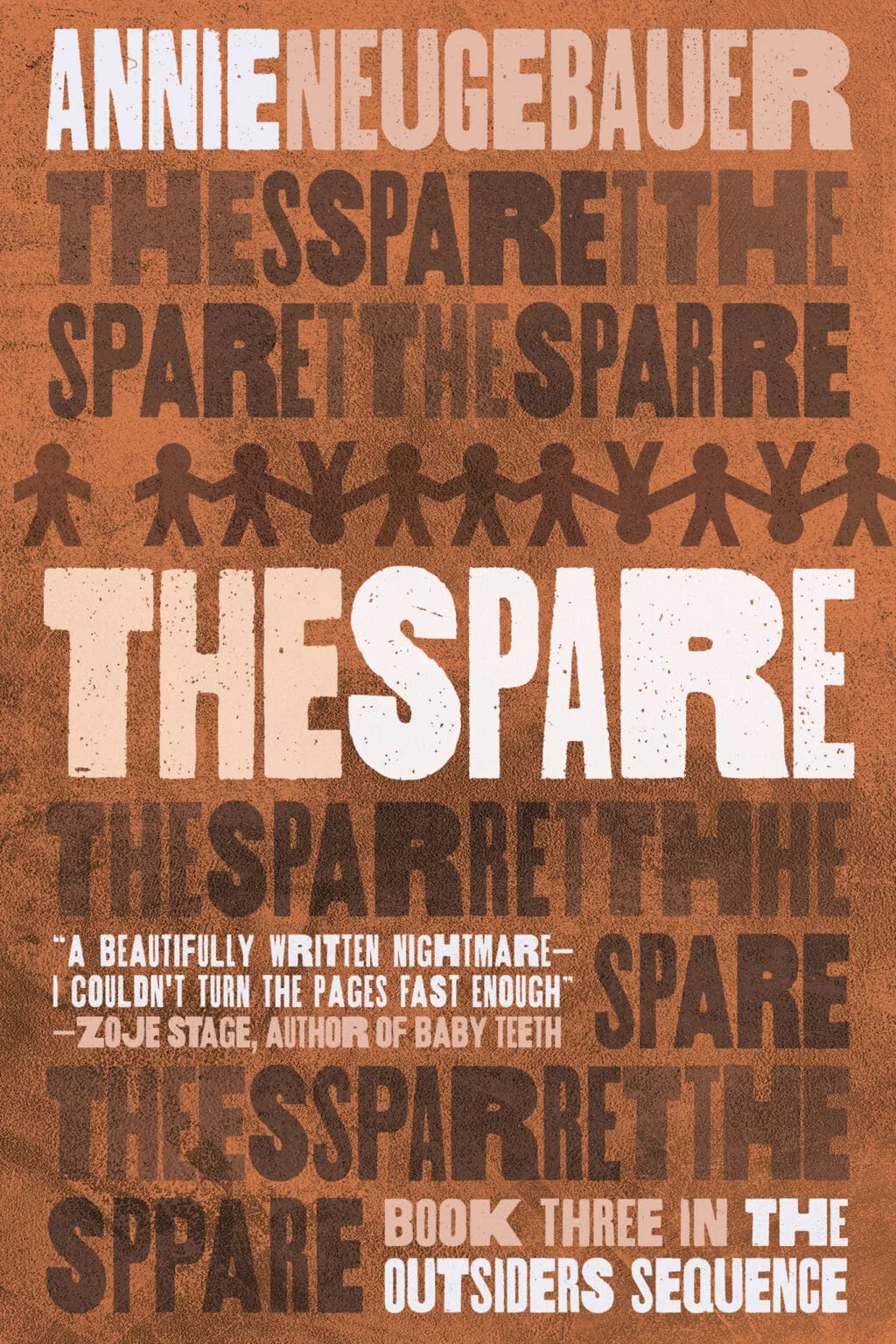
In The Spare, Annie Neugebauer pairs creeping surrealism with a sharp portrait of family alienation. The reviewer rates the sequence finale 8.5/10.
Rating: 8.5/10






A reunion where the numbers keep changing
The Spare makes an already awkward family camping trip feel quietly impossible. Kasper is accustomed to being the person on the edge of extended-family gatherings, but this time the unease takes a stranger turn: out in the wilderness, the number of people around her keeps shifting. Annie Neugebauer builds the premise into the third and final instalment of her Outsiders Sequence, published by Shortwave Publishing, and the reviewer rates the book 8.5/10.
The setup works because its social discomfort is immediately legible. Kasper arrives without the family’s matching “Shultz Crew” sweater and finds some relatives cool toward her. Those details could pass for ordinary reunion friction; here, they establish how thoroughly she feels out of place before the story’s more unsettling events gather force. A nasty accident and Neugebauer’s peculiar numerical disruptions push the trip into territory where familiar explanations no longer seem adequate.
The source review describes the sequence as a set of linked but distinct ordeals, with The Extra and The Other preceding this book. The reviewer has been thinking about the series since reading its first instalment and calls The Spare a strong finish. The books’ shared appeal, in this account, is the way they unsettle perception and let paranoia accumulate without giving the reader an easy place to rest.
Unease with a domestic edge
Neugebauer’s most effective tool, the reviewer argues, is sustained dread: a low, persistent sense that something is wrong. Rather than relying only on a startling premise, The Spare makes uncertainty part of the reading experience. Its impossible details and shifting headcount unsettle the scene, while the family setting keeps the tension close to everyday life. A campsite already asks its visitors to share space, routines and practical decisions; here, those ordinary conditions become an ideal setting for Kasper’s growing isolation.
That isolation gives the horror its emotional weight. The matching sweater is a small omission, but Kasper’s reaction points to something larger than a missed item of clothing. She feels excluded from a family that might be expected to offer belonging, and the reviewer finds this quieter strand as affecting as the book’s uncanny ideas. Being lonely in a crowd can be hard to explain, especially when the people around you are supposed to know you. The novel gives that feeling room to deepen rather than treating it as background decoration.
The review also connects this intimate strain to The Other, which it describes as pairing its doppelganger premise with anxiety around relationships and turning 30. Across the sequence, Neugebauer appears interested in how private fears can sit beneath strange events. In The Spare, the family’s awkwardness and Kasper’s sense of distance make the uncanny feel more personal: the central unease isn’t just that the group’s numbers may not add up, but that Kasper already struggles to feel counted among them.
A finale that keeps its questions open
The reviewer praises the book as “gorgeous” and “ambiguous,” and values that ambiguity as part of its effect. The Spare is presented as a conclusion to the sequence, but the review leaves its mysteries intact and offers no account of the ending. Its recommendation rests on the combination of a memorable premise, controlled psychological pressure and sympathy for a character who feels like an outsider in her own family.
That mix makes the book a fit for readers who enjoy uncanny fiction that draws its tension from relationships as much as from the impossible. Neugebauer’s approach doesn’t keep the dread at a safe distance: the supernatural uncertainty grows out of a recognizable social wound. For this reviewer, that makes the finale both a satisfying culmination of the Outsiders Sequence and a persuasive reason to reconsider a family camping trip.
The reviewer notes that The Spare was due from Shortwave Publishing on March 9th of the following year, and jokes that the sequence has ended their enthusiasm for camping with family. Their parting mood is less relief than bereavement: a final sign of how firmly this strange reunion has lodged in their mind.