In lane Authors & Interviews
John Gwynne’s The Wolves of War Brings Slavic-Inspired Fantasy to a Family’s Fight for Survival
Description
John Gwynne’s epic fantasy follows Halia and her father through a conquered land of clashing princes, forest magic and dangerous choices.
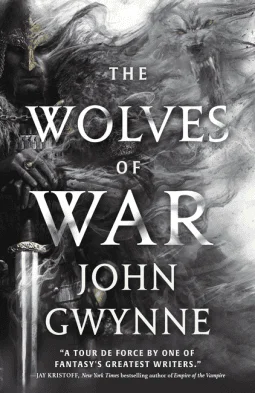
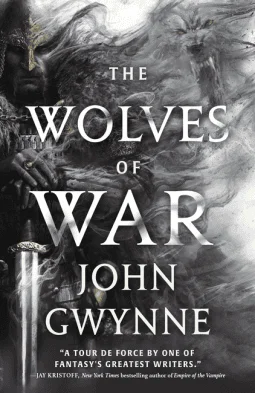
John Gwynne’s The Wolves of War puts a family’s fight for survival at the heart of an epic fantasy about conquest, old magic and the cost of protecting those you love. Its setting draws on Slavic mythology, while its central struggle takes shape through Halia, a young woman whose mysterious powers may offer her family a way through the danger gathering around them.





A conquered people, a daughter with a gift
The Clans once lived according to their own customs and honoured their gods. Northern invaders have since brought them under conquest, leaving the region shaped by violence and uncertainty. Gwynne’s premise gives that upheaval a personal focus: Ivan isn’t interested in kings or grand causes. His priority is keeping his family safe, with particular concern for his daughter, Halia.
Halia has been unable to move her body since birth. At night, though, her dreams carry her into the forest, where she runs with wolves and speaks with fae beings. Those around her see her as cursed. The book’s tension grows from the gap between that fearful judgment and the possibility that her strange abilities could become essential to her family’s survival.
That makes Halia’s story more than a question of whether she can master magic. Her awakening arrives as danger closes in, and using her power means confronting a truth she finds frightening. The family bond at the centre of the premise gives the fantasy its emotional anchor: Ivan wants to shield his daughter, while Halia may have to take on the very risks he hopes to keep from her.
Magic amid rivalries and approaching danger
The threats extend beyond the family. Two princes have become mortal enemies, nations are heading toward conflict, and an iron-toothed witch lurks in the shadows. The source offers these as the forces converging around Halia, without spelling out how their paths cross or what turns the clashes will take. That leaves room for the book’s suspense to come from both the larger struggle and the choices made close to home.
The reviewer responds strongly to Gwynne’s worldbuilding, reading the setting through the history of Medieval Muscovy and the Vikings of the Rus, alongside the book’s Slavic mythological influences. In the reviewer’s view, fantasy gains breadth when it draws on historical periods beyond familiar versions of Medieval England. That distinctive frame suits a story built around clans, gods, forest beings and competing powers.
The reviewer also sees a world populated by characters who are ruthless, cunning, manipulative or drawn to magic, while others distrust it. Those opposing views create a setting where enchantment can inspire fear as readily as hope. The result, in the reviewer’s account, is a story that keeps questions of peace and violence in view without losing sight of its human stakes.
A personal, high-stakes fantasy
For the reviewer, the book’s appeal lies in its scale and its shifts in tone. They describe it as tender and violent, imaginative and exciting, with moments that can hold several of those qualities together. The large conflicts and supernatural dangers give the story its epic sweep; the love binding Ivan and Halia’s family gives that sweep a reason to matter.
The reviewer awards The Wolves of War 10/10 and praises Gwynne’s determination and storytelling. That assessment is their own, and the other writers’ comments offer a separate measure of the book’s reception: Jay Kristoff calls it a “heartfelt tour de force,” Elodie Harper describes it as “vivid, moving and absolutely gripping,” and Robin Hobb says she fell into the story from its first sentence. Mark Lawrence highlights its shifting blend of tenderness, violence, imagination and excitement.
Readers drawn to sprawling fantasy with mythic elements, family loyalty and characters facing difficult choices will find plenty to explore in the premise. The book’s central question is not simply whether Halia can control her magic, but what she may have to accept in order to protect the people she loves. As the threats gather, that choice promises to connect the intimate family story with the wider struggles of Gwynne’s world.
Fonda Lee praises the story’s focus on family love and goodness in dark times, while Ryan Cahill calls it both savage and comforting. Those responses point to the quality the reviewer values most: Gwynne’s ability to set tenderness beside brutality. The book’s lasting pull, on this reading, rests in that tension—and in watching Halia decide how far she’ll go when safety and self-understanding come into conflict.