In lane Genre Fiction
A Blank Page, a New Fantasy, and a New Chapter for the Cormack Chronicles
Description
A New Orleans visit inspires Robin’s Hood, while its author prepares for a move and plans the next stages of her writing life.

A centuries-old oak in Louisiana has given the next Cormack Chronicles story its starting point. After a ten-day visit to New Orleans, I’m back at work on “Midnight Sail,” now in final edits, and beginning the first chapters of “Robin’s Hood.” The trip supplied more than a change of scenery: one striking tree helped me find the central image for a new middle-grade fantasy.
New Orleans offered plenty of stories to carry home. My favorite outing was a pirate tour, where I heard tales of Jean Lafitte and his brother, Pierre. A few details from the guide’s account may find their way into “Midnight Sail,” my time-traveling fantasy. That book is nearing the end of its editorial work, and, as with the other books in The Cormack Chronicles, it will include the first six chapters of the next installment.
A tree opens the door to “Robin’s Hood”
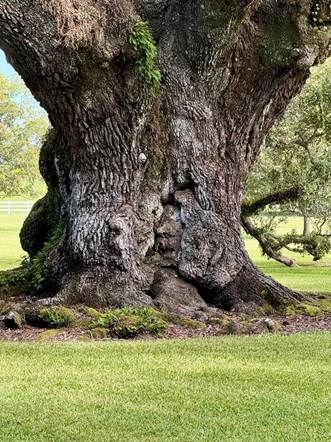
The idea for that next installment arrived during a visit to Oak Alley. The plantation’s history and grounds left a strong impression, but the oaks were what held my attention. I grew up climbing trees on our Oregon farm, yet these Louisiana live oaks were something else: immense trunks, sprawling limbs, and branches so low they seemed to brush the ground.
The trees are estimated to be five hundred years old and may live for as long as one thousand years. They also follow a different seasonal rhythm from the white oaks I knew in Oregon. Louisiana’s live oaks keep their leaves through fall, shedding them in late winter as fresh growth begins. Walking from the main house toward the road, which once followed the Mississippi River before it was diverted by a large levee, I noticed one oak draped in Spanish moss. There was something curious in its trunk. That glimpse became the seed of “Robin’s Hood.”
In the story, three middle-schoolers encounter a great oak in Sherwood after their sword-fighting lessons. Alex, a friend of my hero, discovers a medieval sword. Jaxyn, the group’s practical thinker, warns him to be careful: the sword might be a portal key. Cyrus has a different reaction. He thinks the tree is speaking to him.
Soon the friends are transported to 1857, to the developing settlement of Sherwood. There, they’re pulled into a confrontation after Sheriff Elias Black disqualifies Nathaniel Robbins as the winner of an archery tournament. That’s where the story’s opening takes the trio; the next question is what they’ll do once they’re caught up in the dispute.
Following the story before it becomes a book
I’m not a dedicated outliner, though I usually make notes about a book’s opening. Often, new possibilities arrive when I’m trying to fall asleep. I enjoy that early stretch of writing, when the premise is taking shape and the characters begin to surprise me. Even when I don’t map every scene, I keep a clear sense of the three arcs I need to hold a reader’s interest.
After drafting the first two chapters of “Robin’s Hood,” I still needed a plausible reason the children’s mothers wouldn’t notice their absence while the trio tries to get back to 2027. The answer, for now, involves Cyrus’s friend Toby, a week at summer camp, and a red robin. I’ll write the first six chapters before turning to “Murder on Superstition Mountain,” the opening book in my Sapphire Stone Mysteries series.
Changing projects won’t switch off the new story. Once I know a book’s central theme, ideas and possible turns keep coming while I work elsewhere. A few opening chapters can serve as a foothold: they give the characters and premise somewhere to grow while another manuscript takes priority.
Planning a move alongside the next manuscript
There’s a practical reason to shift to the mystery series after those first chapters. By this time next year, I expect to be living in Mesa, Arizona, and I’d like to have a book ready to introduce in my new surroundings. My husband and I have decided to sell our home in Donald, Oregon. We plan to divide our time between our small place in Mesa and our cabin on the Siletz River, just south of Lincoln City.
Preparing for that change has its own blank-page feeling. I’m making notes about where furniture could go and deciding what to sell, donate, or keep. The larger question is how to shape the days ahead around relaxing, writing, and enjoying a different routine.
Starting “Robin’s Hood” and preparing for a move both begin with possibilities rather than a finished plan. The New Orleans oak gave me a setting and a mystery to follow; the first six chapters will show me how the children’s journey begins. For now, I’m carrying the story forward while making room for the next chapter at home.
Happy writing, Ladies ~