In lane Book Reviews
Gemma Amor’s Happy Hour Brings ’90s London Nightlife to the Killer VHS Series
Description
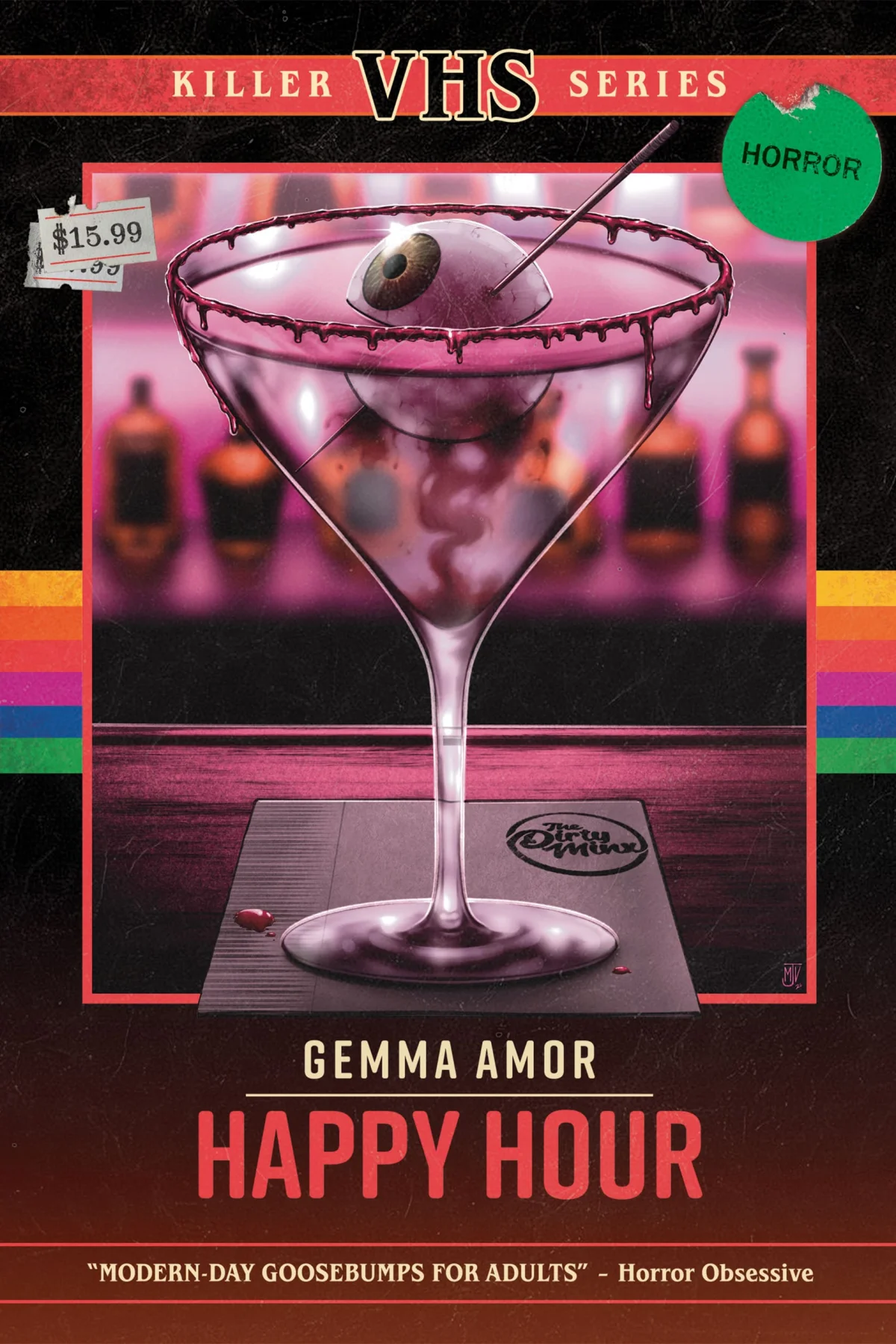
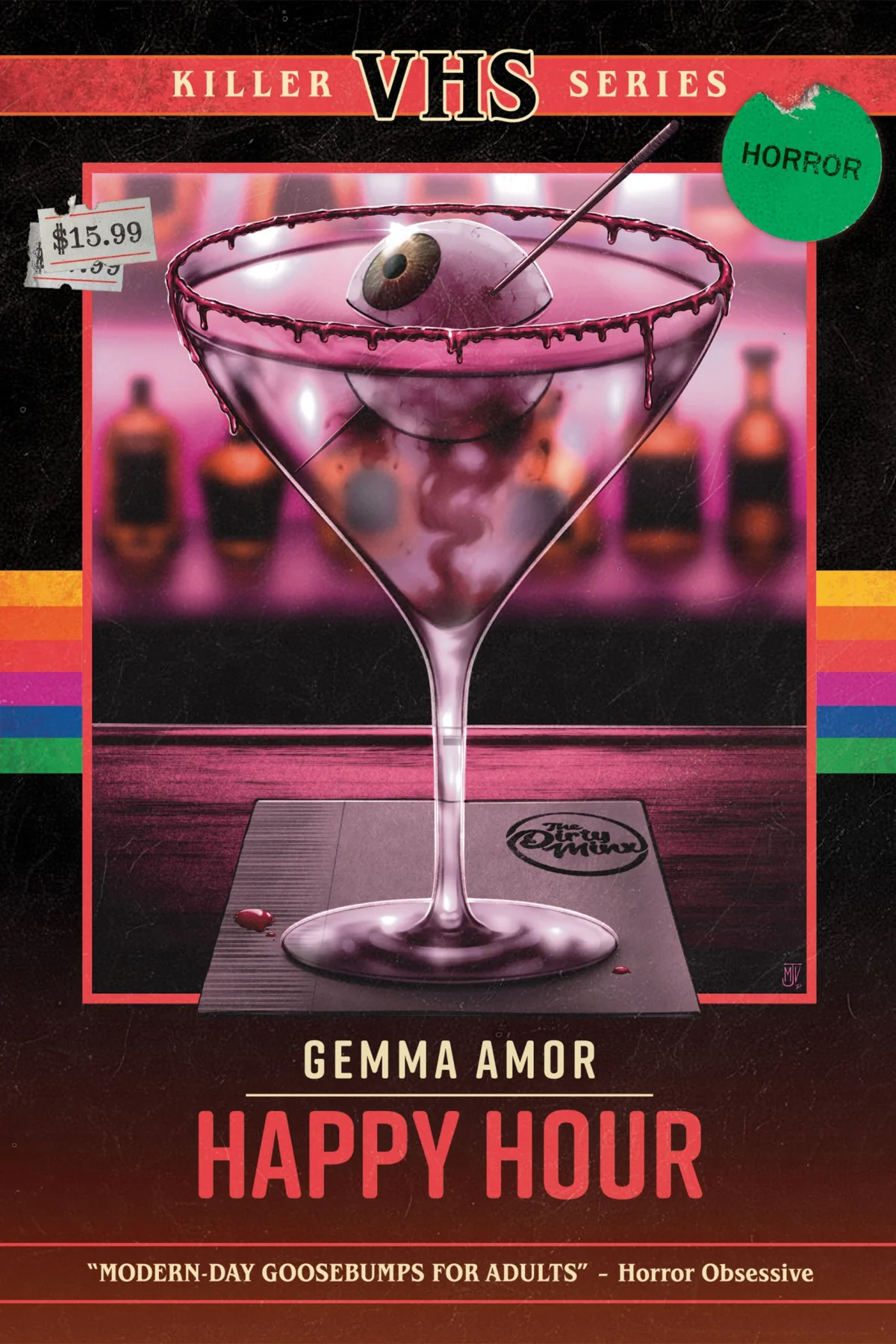
In Happy Hour, Gemma Amor pairs a vividly recalled ’90s club scene with a tense night inside an exclusive London bar.
Rating: /10




A bar with a watchful owner
Gemma Amor’s Happy Hour turns an elusive London cocktail bar into the meeting point for two kinds of excess: the glitzy mythology of celebrity nightlife and the grim reality lurking behind its doors. The ninth entry in Shortwave Publishing’s Killer VHS Series, this novella brings together found footage elements, horror, and a strong sense of ’90s nostalgia. Its central figure, Brian, runs an exclusive establishment for the rich, famous, and powerful. He also has a disturbing way of keeping tabs on what happens there—and of dealing with guests who cross him.
The setup is brisk and unsettling. Brian is caught stuffing a body into a distiller, while a new guest is on the way. The bar’s clientele might be eager to get inside, but the promise of glamour comes with the unnerving question of whether everyone will make it back out. Amor uses that contrast to make the setting feel dangerous before the night’s full shape becomes clear.
The story moves between a single evening at Brian’s bar and his earlier life. In the past, he is a young man struggling for money alongside his brother and his brother’s unpleasant girlfriend. Their immersion in ’90s club culture gives the novel a second pulse: one timeline tightens around the present-night encounter, while the other recalls how Brian’s life brought him to this strange, carefully controlled room.
Two timelines, two kinds of tension
The reviewer's strongest response is to Amor’s evocation of the era. They grew up in the UK during the late ’90s and early 2000s, when celebrity culture came filtered through gossip magazines and entertainment coverage. Those publications fixated on stars’ bodies, relationships, and nights out. The review recalls candid photographs of celebrities leaving clubs in low-waisted bootcut jeans, glittering handbags, and pink berets, sometimes accompanied by a chihuahua. It’s a sharp visual shorthand for a culture that made nightlife both spectacle and commodity.
Amor’s descriptions of clubbing bring that memory to life through sensory detail. The reviewer recalls the smell of sweaty dancers, the sugary taste of alcopops, the beat of “God Is A DJ,” and the cold air outside during a cigarette break. Though their own clubbing years came later, in the early 2010s, those impressions made the earlier scene feel immediate. This isn’t nostalgia built only from clothes and music references; it comes through in the physical textures of a night out, including its less polished moments.
That immersive quality gives the backstory warmth and momentum, while the bar’s present offers a much harsher kind of suspense. Brian faces a celebrity guest the reviewer describes as thoroughly unpleasant. The encounter raises the pressure as the evening unfolds, and the reviewer finds these passages anxiety-inducing, shocking, and subversive. The clash between public fame and private behavior is part of the book’s appeal, especially for readers who remember how celebrity conduct was discussed in that period.
The two strands create a lively change of pace. The past has the measured craft of a cocktail, with carefully balanced ingredients and a fresh garnish; the present is closer to a crowd jolted by a chaotic round of drinks. That difference gives the novella room to shift between atmosphere and threat. The reviewer praises Amor for keeping the narrative’s direction hard to predict, so the growing suspense doesn’t depend on the reader simply waiting for a familiar horror beat.
A standalone dose of ’90s horror
Happy Hour is a standalone story in the Killer VHS Series, whose books draw on found footage and the nostalgic mood of horror’s ’80s and ’90s heyday. The series has been described by Horror Obsessive as “the modern-day Goosebumps for Adults.” New readers can approach this installment on its own, while series followers will find another entry shaped by period detail and unsettling genre play.
For readers drawn to horror that builds a vivid social world around its unease, Amor’s novella offers a particularly rich setting: an exclusive bar where access, celebrity, and danger share the same narrow doorway. The reviewer calls it a fantastic novella and praises its nostalgic force, tense present-day scenes, and steady surprises. Shortwave Publishing provided the reviewer with an advance reader copy. The lasting invitation is to step into Brian’s bar for the atmosphere—and to wonder what the night will cost its guests.