In lane Book Reviews
Reflecting on Clifford D. Simak's "Time and Again": A Visionary Tale from 1950
Description
Clifford D. Simak's "Time and Again" presents a thought-provoking narrative blending science fiction themes with philosophical musings, leaving a lasting impact since its debut in 1950.

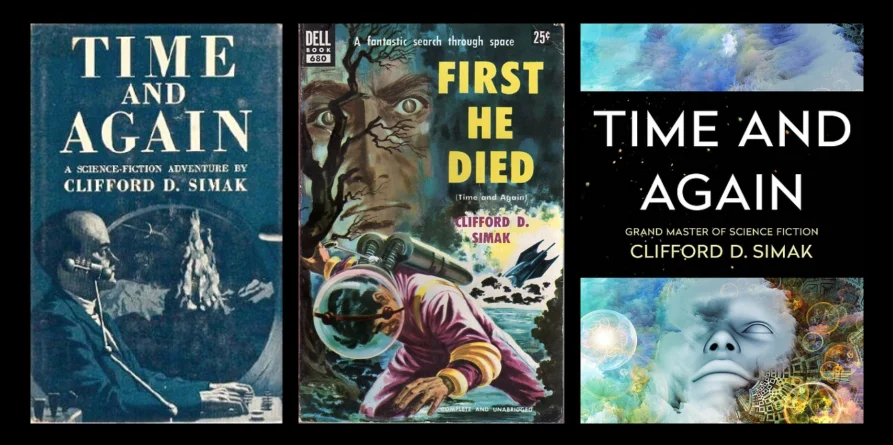
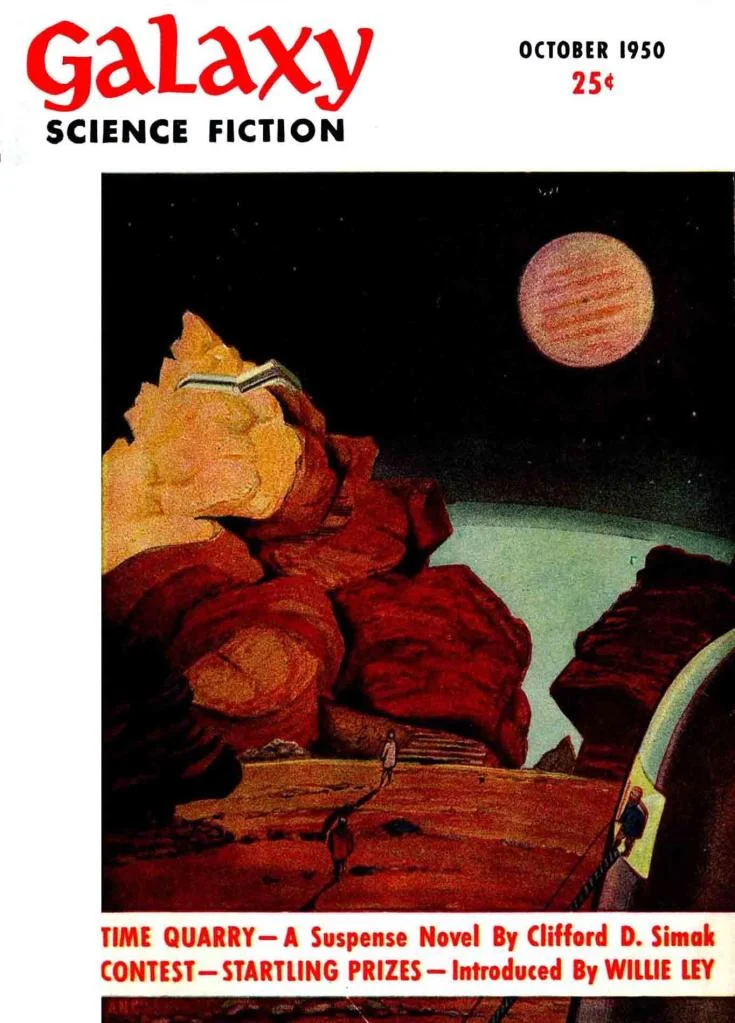
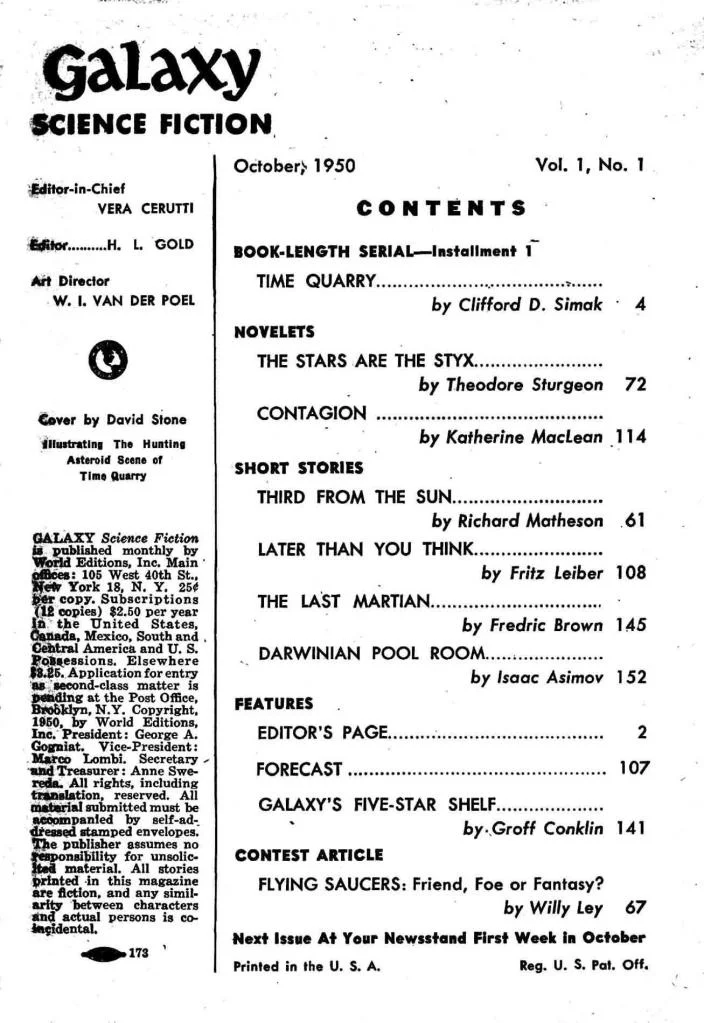
Time and Again by Clifford D. Simak holds the distinction of being the inaugural story in the very first issue of Galaxy Magazine, published in October 1950. The tale, originally serialized as Time Quarry, resonates with readers today and is available in multiple formats, including paperback, Kindle, and audiobook on platforms like Amazon.
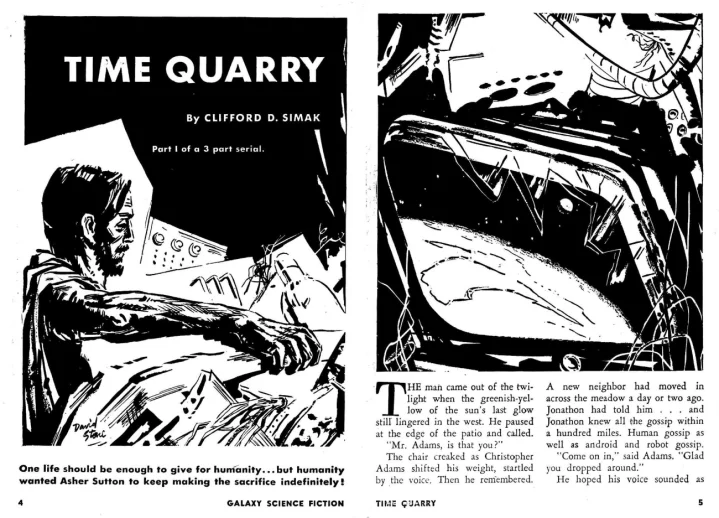
The story's journey began for me when I took the bold step of starting at the beginning of Galaxy Magazine. My approach was unconventional; rather than diving into the serialized story, I opted for the audiobook. After finishing the tale, I looked forward to revisiting the magazine to indulge in Richard Matheson's “Third From the Sun.” The premiere issue of Galaxy is undoubtedly impressive.
Taking a moment to reflect on the historical context of 1950, I tried to envision what it was like for readers back then. Personally, I was born a year later, making it challenging to grasp fully the zeitgeist of science fiction at that time. Yet, through a life-long love for classic films, I can glean some insight about that era from the cinematic portrayals. It's intriguing to note that films focused on real people in 1950 rarely featured characters interested in science fiction, prompting a question: Who was the first character in film to identify as a science fiction enthusiast?
Among the candidates, I mused about George McFly from Back to the Future (1985) or young David MacLean from Invaders from Mars (1953), and even Eliot Rosewater from Slaughterhouse-Five (1972). It’s fair to say that science fiction was not well regarded in 1950, which adds a layer of complexity to Simak's work. The comedic portrayal of pulp fans in **Artistas and Models** suggests a less-than-serious perception of the genre.
Returning to Time and Again, if I approached it without prior knowledge of the author or its publication timeline, I might have likened the narrative style to that of Philip K. Dick. The story propels us 6,000 years into the future, centering on Christopher Adams, who receives a grave warning from a visitor five centuries ahead: Archer Sutton must be eliminated upon his return from a long-ago space mission.
Simak's foresight regarding technology and the evolution of intelligent beings prompts speculation. If transported to 1950, how might he react to modern advancements like YouTube in 2026? The often-negative perception of science fiction in his time leads to curiosity about the potential resistance to such ideas.
Simak consistently portrayed robots and dogs with warmth, but one could ponder whether his perspective reflects an outdated notion of subservience, akin to depictions in shows like Upstairs Downstairs and Downton Abbey. Even in his futuristic imaginings, he recognizes the future yearning for autonomy.
As the story unfolds, Sutton eventually arrives, but in dire straits — a battered spacecraft stripped of essentials. He returns from 61 Cygni, a world that long rejected outside contact. A profound change occurs within Sutton during his time on that distant planet, reminiscent of the transformative experiences depicted in Arthur C. Clarke's works like 2001: A Space Odyssey.
Critical reception of the 1951 hardcover edition was largely positive, although I remain ambivalent about its relevance to contemporary audiences. Some readers champion Simak's narrative as his finest work, praising its intricate plotting and ethical inquiries. Archer Sutton emerges as a figure advocating equality for all entities, akin to a blend of Christ and Abraham Lincoln.
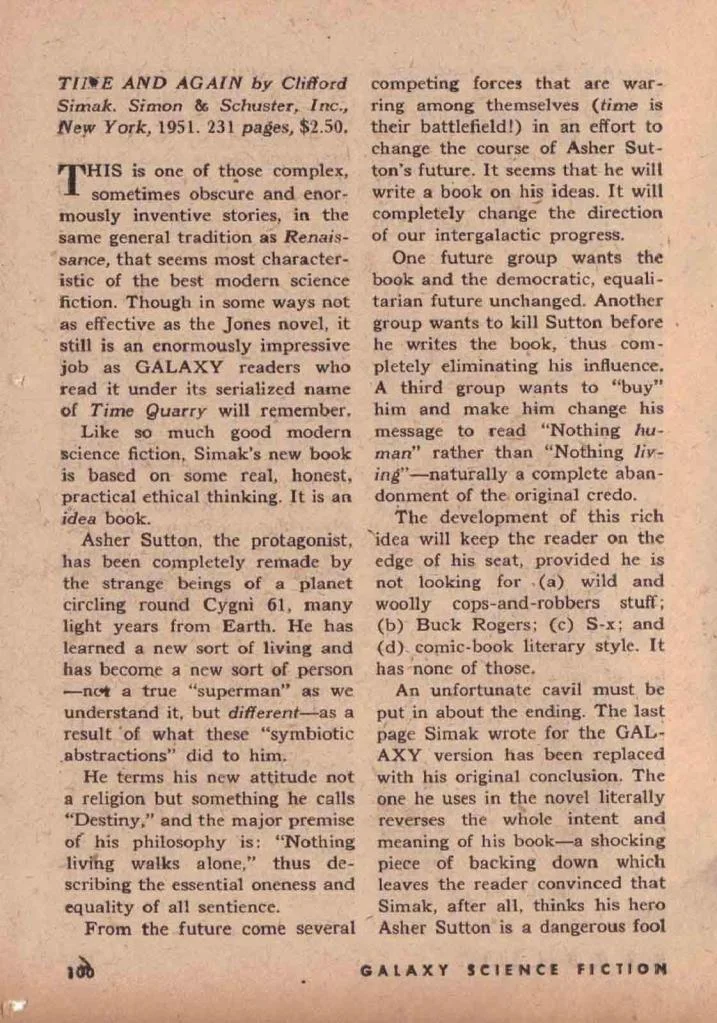
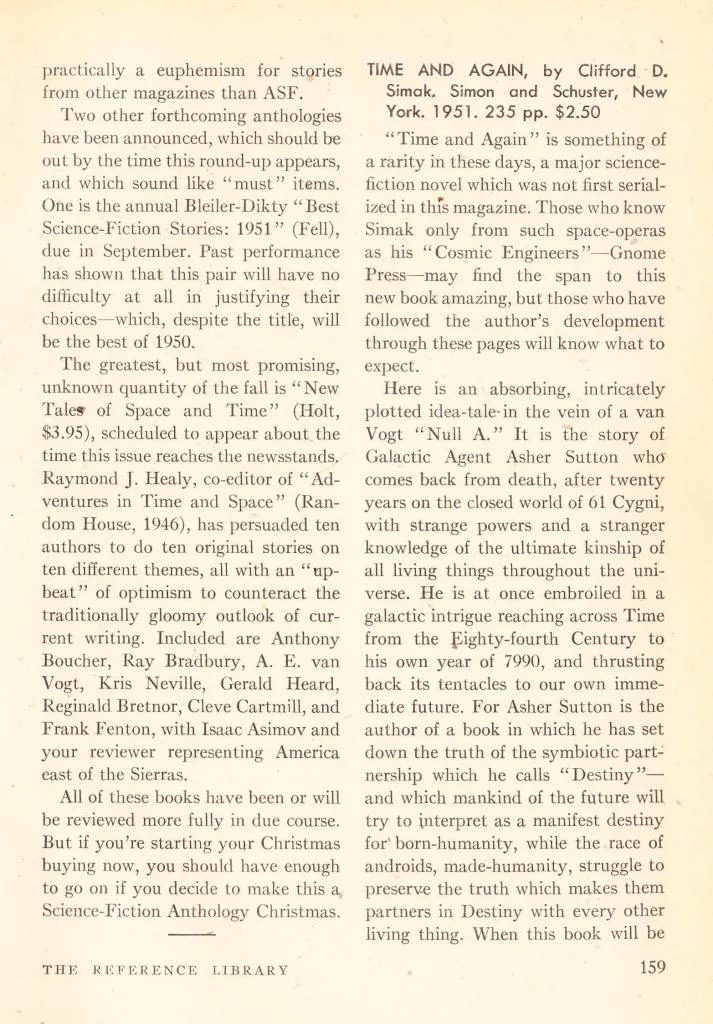
Groff Conklin’s review in the August 1951 issue of Galaxy Magazine indicates that the serialized and hardcover endings differ, though both resonate with similar philosophical themes. The ambiguous nature of this resolution would likely appeal to fans of Philip K. Dick's narratives.
Recently, while delving into Michael Pollan’s book A World Appears, which explores consciousness, I found a surprising parallel with Simak's themes. Pollan suggests that all life — even beyond living entities — might possess a form of consciousness. This concept likely would have been challenging for the 1950 reader, setting Simak's work apart as he unwittingly addresses such profound ideas.
Furthermore, Simak's narrative is more than an argument for the equality of conscious beings. It subtly critiques the zeal of science fiction enthusiasts who envision humanity's expansion across the universe as a destined journey. He seemingly advocates for a different approach where exploration collides with understanding and reflection.
Within the tale, time-traveling agents engage in a conflict aimed at ensuring humanity's superior reign for a million years — a concept paralleling stories like The Terminator. Much like the film's narrative, a mission to eliminate a pivotal figure, Sutton, emerges as a central conflict, underpinning the story's tension.
For prospective readers, a word of caution: while Time and Again is a thought-provoking read packed with ideas, its pacing can feel slow, leaning into lengthy dialogues. Ultimately, it challenges its audience to ponder notions of consciousness, identity, and our place among the stars.
ISFDB.org reflects a range of reprint editions and numerous reviews of Time and Again, with most of the reviews being brief retrospectives. Notable recollections, like Algis Budrys's fond remembrance of Galaxy’s debut issue, highlight the story's era and its legacy in the science fiction canon.