In lane Publishing Industry
Imagining Humanity's Reaction to an Alien Arrival: Insights and Possibilities
Description
What would happen if an alien spaceship appeared in Earth's orbit? Explore the potential societal shifts and personal responses to such an unprecedented event.
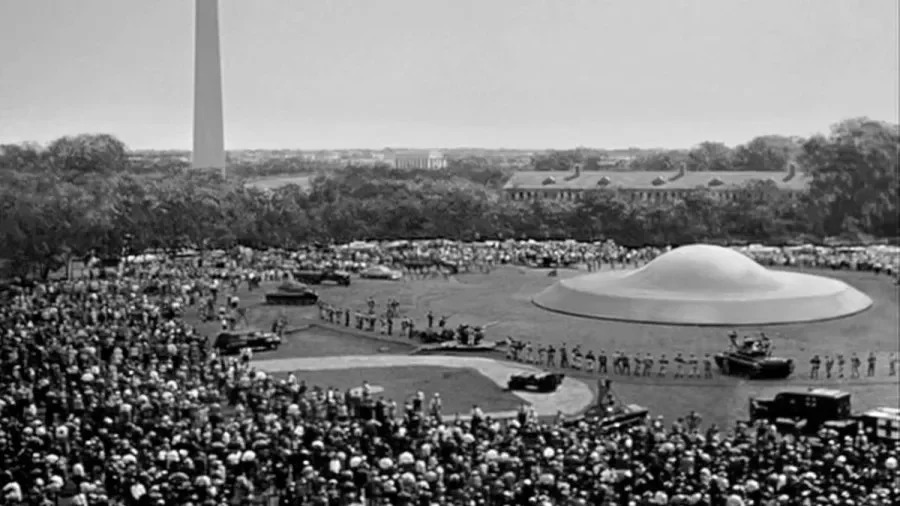
Imagine for a moment that an alien spaceship has parked itself in orbit, visible from the International Space Station. Accompanying this grand arrival, the aliens transmit signals broadcasted in every nation's language, announcing their presence. The question arises: how swiftly would humanity become aware of these extraterrestrial visitors? Given today's technology, it’s reasonable to assume that almost everyone on Earth would know within the hour, potentially reaching 99.9% awareness almost instantly.
The allure of this scenario raises several intriguing questions about how the world would react. Would the initial shock cause global audiences to be glued to their televisions for days, similar to the collective attention during the moon landing or the tragic events of September 11? Once the novelty of extraterrestrial life sets in, how would our day-to-day lives change? Would alien visitors significantly transform our global society in the long run, or would their presence fade into the fabric of normalcy?
The Nature of Interaction
Consider the possibility that the aliens choose not to land on Earth, possibly due to the risk of microbial contamination from either side. Such a decision could lead humanity to view the occurrence as somewhat abstract. While we've consumed an abundance of sci-fi books and films, have they truly prepared us for the reality of contact with extraterrestrial life, or will they simply create expectations that can’t be met? It's also essential to set aside the notion of hostile invasions; let’s envision a scenario where these visitors remain in orbit, sharing advanced technologies and even establishing communication channels — perhaps hooking us up with a galactic internet.
This might lead to a rich exchange of information and perspectives, with humanity gaining insights into multiple alien worlds through video feeds. Yet, there’s a limit to intergalactic travel, especially for biological entities. Our hypothetical visitors could, instead, be advanced AI systems designed to maintain their existence across long spans, beyond what organic lifeforms can achieve.
Enduring Human Nature
In contemplating the societal impacts of prolonged contact with aliens, it raises the question of whether humanity would drastically change. Would the knowledge of alien civilizations lead to an end to wars, environmental pollution, and egotistical tribalism? Would humans abandon their longstanding beliefs, or would they seek to adopt new philosophies and religious practices inspired by encounters with these beings? The potential for addiction to consuming alien broadcasts exists, but would it provoke any fundamental transformation in how we live? Would literary scholars hew to the study of alien history and art?
Interestingly, would such a monumental event reshape our relationship with fiction itself? Notably, the effectiveness of science fiction seems to correlate with human experiences — genres shift as significant events unfold. The narratives of early space missions have waned as reality has often outpaced imagination. Many readers might find themselves invigorated to explore alien literature but may also revert to their existing literary preferences over time, as personal tastes do not fundamentally change.
Personal Reflection and Technological Limits
As an ardent fan of speculative storytelling, I envision being thrilled by the presence of a spaceship. I would likely immerse myself in television coverage, captivated by the mind-boggling reality of extraterrestrial existence. Yet, there’s a lingering concern that my fixation would not last indefinitely. I might settle into a routine of watching feeds from other planets, although the identical pattern may lead to disinterest—much like my experience with nature documentaries.
There's a pragmatic belief in the limitations of technology and comprehension. It seems likely that any revelations made by aliens wouldn't uncover profound secrets of existence. Different species may perceive the universe uniquely, yet the boundaries of understanding remain constrained. Chronicling humanity's cyclical nature might lead one to speculate that our tech-dominant civilization could experience collapse, reverting back to simpler ways, ultimately leading to aliens residing in the realm of myth.
Conclusion: A Narrative Opportunity
Ultimately, if I were adept at crafting narratives, this speculative scenario could flourish into a gripping science fiction novel. It raises questions about human identity, morality, and our response to profound changes that shake our understanding of life as we know it. As we navigate the boundaries of our imaginations, we might find that the most compelling answers lie not in the answers themselves, but in the questions the presence of alien life raises.
JWH