In lane Authors & Interviews
John Gwynne’s The Wolves of War Opens a Slavic-Inspired Fantasy Duology
Description
Halia’s strange magic and a family’s fierce bond anchor John Gwynne’s war-torn fantasy, whose patient plotting sets up an intriguing second book.
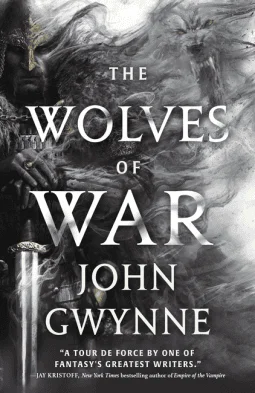
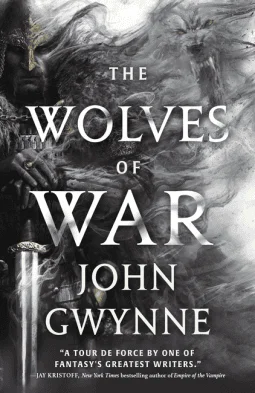

In The Wolves of War, John Gwynne makes a family’s fight to survive the emotional center of a story filled with rival rulers, ancient magic and monstrous threats. The first book in a new two-part fantasy series takes inspiration from Slavic mythology and tenth-century Eastern Europe, while making no claim to historical fidelity. Its strongest thread is Halia, a child whose unusual powers may be the only thing standing between her family and a gathering storm.
That mix of intimate stakes and sprawling conflict made this an appealing entry point for a reviewer who usually gravitates toward horror and science fiction. Fantasy has often been a harder sell for them: George R. R. Martin and R. Scott Bakker were among the few authors whose work had previously landed as a full success. Gwynne’s reputation had been on their reading list for some time, and the launch of a fresh duology offered a way in without first working through his earlier books. Their verdict is measured but warm: The Wolves of War is “pretty damn OK”—and engaging enough to make the follow-up a definite prospect.
A conquered people and a family under pressure
The Clans once lived according to their own customs and beliefs. Northern invaders have since brought violence and conquest, and the forest communities face demands from a growing kingdom. Ingvar, the northern ruler, pushes farther into Slavic lands after a tax collector returns without a hand. His response draws him toward Mal, a rival ruler whose actions have already helped set off a crisis among neighboring clans.
Mal’s abduction of children from another tribe forces that clan’s elders into a contest over who will lead. The dispute lands close to home for Ivan, a father whose chief concern is keeping his family safe. His daughter Halia has been unable to move freely since birth, and one of the elders accuses her of being a witch. The accusation has a basis in the story’s magic: while asleep, Halia can leave her suffering body, speak with fae creatures and run alongside wolves in a mystical realm. As danger closes in, those abilities can also become a weapon.
Halia’s awakening gives the book its clearest personal journey. She must learn what her powers can do and decide how far she is willing to go to shield those she loves. The premise carries a dark edge, but the review’s most affecting scenes come from the bond between Halia and Ivan. His care for his daughter brings tenderness to a story otherwise shaped by conquest and threat. That family loyalty also reaches beyond their immediate household, drawing an experienced killer to their side later in the book.
Myth, monsters and careful plotting
Gwynne draws on mythic material while keeping the story firmly in fantasy. References such as the Nailed God Christ, Greece and Iraq gesture toward the familiar past, but witches, dreamwalkers and monsters set the terms of this world. Early on, a search party sent into the woods to find abducted companions encounters a leech creature described as nightmarish. The book’s supernatural dangers aren’t just background decoration; they add another source of pressure to a conflict already complicated by rival powers and local divisions.
For the reviewer, war forms the story’s main political engine, but Gwynne’s skill lies in how he arranges its many moving parts. The plot begins with separate strands—Ingvar’s expansion, Mal’s actions, the clan elders’ leadership struggle and Halia’s developing magic—and gradually pulls them closer together. This is patient construction, and the payoff depends on following the connections as they form. Gwynne’s straightforward, readable prose helps keep the story accessible even when its competing conflicts and characters demand attention.
The balance between those strands isn’t always even. Halia stands out as the most fully drawn character, with the richest perspective and the most compelling development. Her path has the shape of a hero’s journey as she learns to understand her abilities. The reviewer also notes that Gwynne’s inspiration for Halia was his daughter Harriet, who has died; the love behind that connection comes through most clearly in the scenes between Halia and Ivan.
Ingvar is less distinctive by comparison. His concerns about legacy and establishing his place as a ruler give his chapters a familiar fantasy flavor. The reviewer found those sections readable, but closer to well-worn genre territory than Halia’s story. That difference gives the book a clear center of gravity: the larger struggle matters, yet its emotional force rests with the girl and the family trying to survive it.
A first book that points to the next
As the opening half of a duology, The Wolves of War spends much of its time bringing people and conflicts into position. Its climax builds into a fast-moving finish, then leaves the characters at a turning point with the story still unresolved. That structure may test readers who want a complete arc in one volume, but the reviewer came away invested in the setting, the family and the dangers gathering around them. They plan to read the second book when it arrives, and may then turn to Gwynne’s earlier work.
For readers who like myth-inflected fantasy, family loyalty under strain and several rival forces moving toward a collision, this first installment offers a promising start. Halia’s unusual viewpoint and Ivan’s devotion provide a human anchor amid the magic and warfare, while Gwynne’s measured plotting keeps the wider story unfolding. The second book will have to deliver on the tensions established here; for this reviewer, there’s already enough reason to find out where they lead.