In lane Publishing Industry
Dannika Patterson on the Playful Ideas Behind Duck, Duck, Bruce!
Description
Dannika Patterson shares how a clever café name inspired a picture book about difference, belonging and a duckling who saves his friends.
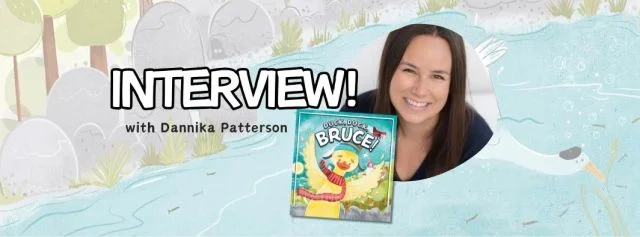


With only 20 words inside its pages, Duck, Duck, Bruce! asks its illustrations to carry much of the story—and gives young readers plenty to notice. Author Dannika Patterson’s picture book follows a duckling whose particular way of thinking and moving becomes a strength when his friends need him. Illustrator Jasmine Berry adds distinctive characters, rich textures and a mischievous wolf, turning a simple read-aloud into a story about individuality, acceptance and ingenuity.
The book’s name began with a real café and a menu that Patterson couldn’t stop reading. In this conversation, she explains how that phrase helped her reshape a much longer manuscript, what Berry brought to the story, and how she hopes families and educators will use the book to make room for different ways of being.

A café name becomes a story
Patterson first encountered the phrase “Duck Duck Bruce” in Fremantle, Western Australia, while visiting for her sister-in-law’s baby shower. The café of that name had been a local favourite for seven years before closing permanently in 2023. Patterson chose it for brunch because the name caught her attention. The menu made the visit even more memorable: dishes included “Rhubarbra Streisand,” granola with steamed rhubarb; “Hot Mess,” chilli scrambled eggs; and “Orange Is The New Stack,” pancakes.
She took so long to order that her family began to wonder whether she’d ever choose a dish. Patterson was too busy enjoying the menu’s wordplay, she says, laughing and clapping as each name caught her eye. The meal, she adds, proved as good as the writing that had delayed it.
The phrase stayed with her for months. Patterson had already been working on a story about different ways of thinking, being and doing. Its human characters and roughly 700 words weren’t coming together as she wanted, and reducing the draft below 500 words had become a struggle. When she returned to the manuscript, “Duck Duck Bruce” surfaced again. This time, she imagined the central character as a duckling and recognized that the story might need a different form.
“Words are my thing!” Patterson says of her initial resistance to using fewer of them. But she follows a personal writing rule: when she hears a character’s voice, she listens. She deleted the earlier manuscript and wrote a new version built around the same idea in just 20 words, most of them “duck.”
Because the words offered so little detail, Patterson added more illustration notes than she typically would. They helped the publisher understand the larger visual story she had in mind. EK Books responded to the manuscript and signed it; former publisher Anouska Jones later shared the news that Jasmine Berry would illustrate the book.

What the pictures add
For Patterson, Berry’s illustrations give each duck a recognizable personality through its features, while the palette and layered textures help shape the book’s inviting, playful mood. The flock belongs together, but its members don’t look or act alike. That visual distinction supports the story’s central idea without requiring the text to spell it out.
Berry also introduced a character Patterson hadn’t included in her original pitch: a she-wolf antagonist. The wolf’s appearances add a thread of comic suspense. Patterson expects children to enjoy spotting her in the spreads on repeat readings and watching her prepare to approach the unsuspecting ducks.
There’s also a light aircraft. Asked what she loves most about Bruce, Patterson first names his beanie and his precision landing on a moving vehicle to rescue his friends. Then she returns to what makes the character matter to her: Bruce is allowed simply to be himself. Nobody shames or teases him, and the story doesn’t stop to label or justify his differences. The other characters notice him, accept him and respect him. When his way of thinking and doing helps save the day, they celebrate.
That response gives the rescue its emotional weight. Bruce’s difference isn’t presented as a problem he must overcome before he can belong. It’s part of who he is, and it proves valuable to his friends.

Making room for every reader
Patterson’s hope for the book is that young readers will find joy in recognition. The intended audience is children aged 3–8, and she wants them to encounter characters who remind them of themselves, their friends or their families. A child might recognize the feeling of doing things differently from everyone else and feel seen without feeling judged. Another may be delighted simply because the story is full of ducks. Patterson counts both responses as a success.
Her favourite spread is the one featuring the light aircraft. She also enjoys a publishing oddity: the back-cover blurb has more words than all the pages inside the book put together. That’s a first for her, and she suspects it may be a last.
For read-alouds, Patterson proposes a movement-based variation on Duck, Duck, Goose. Children sit in a circle while one child walks around tapping heads and saying “duck.” Instead of calling “goose,” the child chooses someone by saying “Bruce.” The selected child can then make their way back to the open place in whatever manner they choose: skipping, crawling, twirling or somersaulting. The chasing child copies that movement.
After the game, Patterson suggests inviting children to design a duck of their own. Younger children, around ages 3–5, might use an outline or colouring sheet; older children in Prep to Year 2 could work with collage materials. They can name their ducks and talk about what each one likes and dislikes. Together, the movement game and art activity offer natural ways to discuss personality, preferences, neurodiversity and difference.
Patterson says she tries to let children guide those conversations, since what matters to the group often emerges as they talk. The sequence—story, active play and making—also gives children with different interests and learning styles several ways into the experience.

A story shaped by ongoing learning
Patterson hopes Duck, Duck, Bruce! becomes a well-loved repeat read in homes and classrooms, entertaining children while opening conversations. Her approach draws on her psychology studies as well as lived experience. She emphasizes that her understanding of neurodiversity has changed over time, and that each person’s experience is their own.
That learning continued during the years between the story’s first conception and publication. Patterson says traditional picture books typically take two to four years to move from initial idea to finished book, and her education and experience have continued to develop in the meantime. She encourages adults, especially those who work with children, to keep learning about the many ways people think, live and act. The story’s quiet invitation is to make room for that variety—and to enjoy the laughter along the way.

About Dannika Patterson

Dannika Patterson is a Brisbane-based author of more than twelve books for children, a workshop presenter, copywriter and small business owner. She holds degrees in Psychology and Journalism. After an international writing career helping organisations tell their stories, she turned her attention to books and experiences for young readers, with a focus on wonder, self-awareness and children’s emotional and social development.
Dannika Patterson’s website, Instagram and Facebook.
Find illustrator Jasmine Berry at JASMINE BERRY Art and Graphic Design | Discover Creativity — Join Us Today, Instagram and Facebook.
Duck, Duck, Bruce! is available through EK Books and Simon and Schuster.
With thanks to EK Books and KEAN & Creative for the collaboration.
===