In lane Authors & Interviews
Black Horror: Canonical Voices from Then to Now Traces Three Decades of Stories
Description
Maurice Broaddus and Dr. Chesya Burke bring Black horror’s history and new voices together in an anthology the reviewer rates 9.5/10.

Rating: 9.5/10


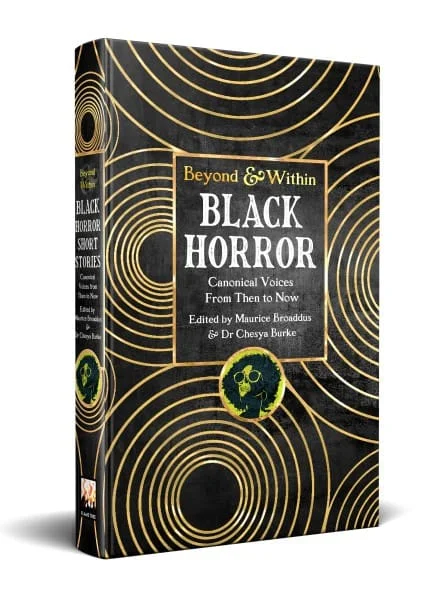
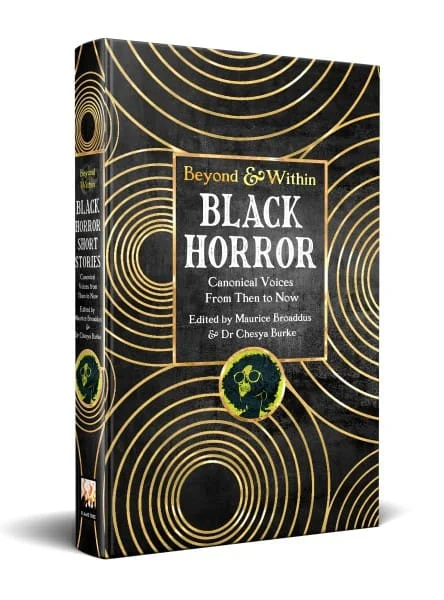
Black horror gains both a literary record and a showcase for its changing possibilities in Black Horror: Canonical Voices from Then to Now. Edited by Maurice Broaddus and Dr. Chesya Burke, the anthology gathers stories spanning roughly 35 years, pairing unsettling fiction with context from writers who have helped shape the field. The reviewer, a relatively new horror reader, found the collection an absorbing introduction and gave it a 9.5/10.
Broaddus is an award-winning writer, community organizer and educator. Burke is a scholar, professor and award-winning author, and contributes the introduction. The collection includes work by Tananarive Due, P. Djèlí Clark, Linda D. Addison, Brandon Massey, Justina Ireland, Jewelle Gomez, Sheree Renee Thomas, Wrath James White and Victor LaValle, alongside a selection of stories chosen from open submissions.
A genre shaped by experience
Burke resists pinning down a single definition of Black horror in her introduction, observing that some readers recognize it intuitively, while others may not consider its stories horror at all. The reviewer’s reading of the collection points to one reason: the genre can draw on Black American experiences and inherited histories that may not register as frightening to readers who haven’t encountered them in the same way. The resulting stories work across several kinds of fear, from the supernatural to the realities of history and its lasting effects.
That breadth also complicates the boundaries of the genre. The reviewer connects the anthology’s concerns with books such as Toni Morrison’s Beloved and Octavia Butler’s Kindred, as well as contemporary work by Tananarive Due, Victor LaValle and S.A. Cosby. Those comparisons offer readers useful points of recognition without suggesting that the works all approach horror in the same way.
For additional context, the reviewer read Robin Means Coleman’s Horror Noire: Blacks in American Horror Films from the 1890s to Present. Coleman’s study focuses on film, but the reviewer found that its account of the medium’s history also helped illuminate some of the cultural background informing Black horror fiction. The anthology takes a different route: its stories are arranged chronologically, tracing developments from the early 1990s to the present, while the writers’ notes link individual works to the genre’s continuing growth.
Stories that linger
The reviewer highlights four pieces that demonstrate the range of the collection. Rusty Cundieff’s KKK Comeuppance will be familiar to some readers as a segment of the 1990s film Tales from the Hood, which stars Corbin Bernsen in the role of a Southern politician. Presented here as the film’s shooting script, the story offers a different way to encounter that memorable tale of vengeance connected to a plantation and its former inhabitants.
Brandon Massey’s “Granddad’s Garage” stood out especially for the reviewer, who teaches history. Its look back at the past follows Steven’s grandfather and his work to preserve Black history, then considers how that responsibility reaches the next generation. The piece makes the act of keeping history alive part of its emotional center, giving the collection’s broader attention to memory a personal scale.
“Night Doctors” introduced the reviewer to P. Djèlí Clark’s writing. Set in the American South in 1937, it follows a writer gathering accounts from former slaves before their stories disappear. Its title points toward the tale’s darker material: the Night Doctors, figures associated with illegal medical experiments carried out at night. The setup brings the work of preserving testimony into uneasy contact with the threats surrounding it.
Tananarive Due’s “Summer” moves into the Okeepechee Swamp, where an unnatural entity uses summer babies as nesting grounds. For Danielle, the presence seems to have an unsettling effect on her colicky daughter, leaving the reader with a disturbing uncertainty about what care the child needs. Due’s note adds another layer: she identifies the story as the starting point for her literary universe centered on the fictional city of Gracetown.
Fiction with a guide to its roots
That combination of narrative and commentary is one of the anthology’s clearest strengths. The reviewer describes the book as half terror, half academic, a balance that lets the stories unsettle while giving readers a way to consider the histories and choices behind them. Each writer’s note offers a view of the story’s origins and, in some cases, its place in the development of the genre. For readers who know the horror canon well, these notes provide a chance to hear from the writers themselves; for newcomers, they give the collection a helpful thread to follow.
The reviewer found much to enjoy in the stories and in the historical perspective surrounding them. Black Horror: Canonical Voices from Then to Now makes room for established writers, newer voices and open-submission selections, while showing how a literary tradition can honor its past and keep expanding. Readers looking for horror that tests familiar ideas about fear—and for fiction accompanied by insight into the forces that shaped it—will find a thoughtful, often unnerving place to begin.