In lane Authors & Interviews
Hailey Piper’s She Isn’t Herself Tonight Turns Heartbreak into Literary Horror
Description
Hailey Piper’s literary horror follows Rabbit through a breakup, unsettling bodily changes and the approach of an expected alien return.
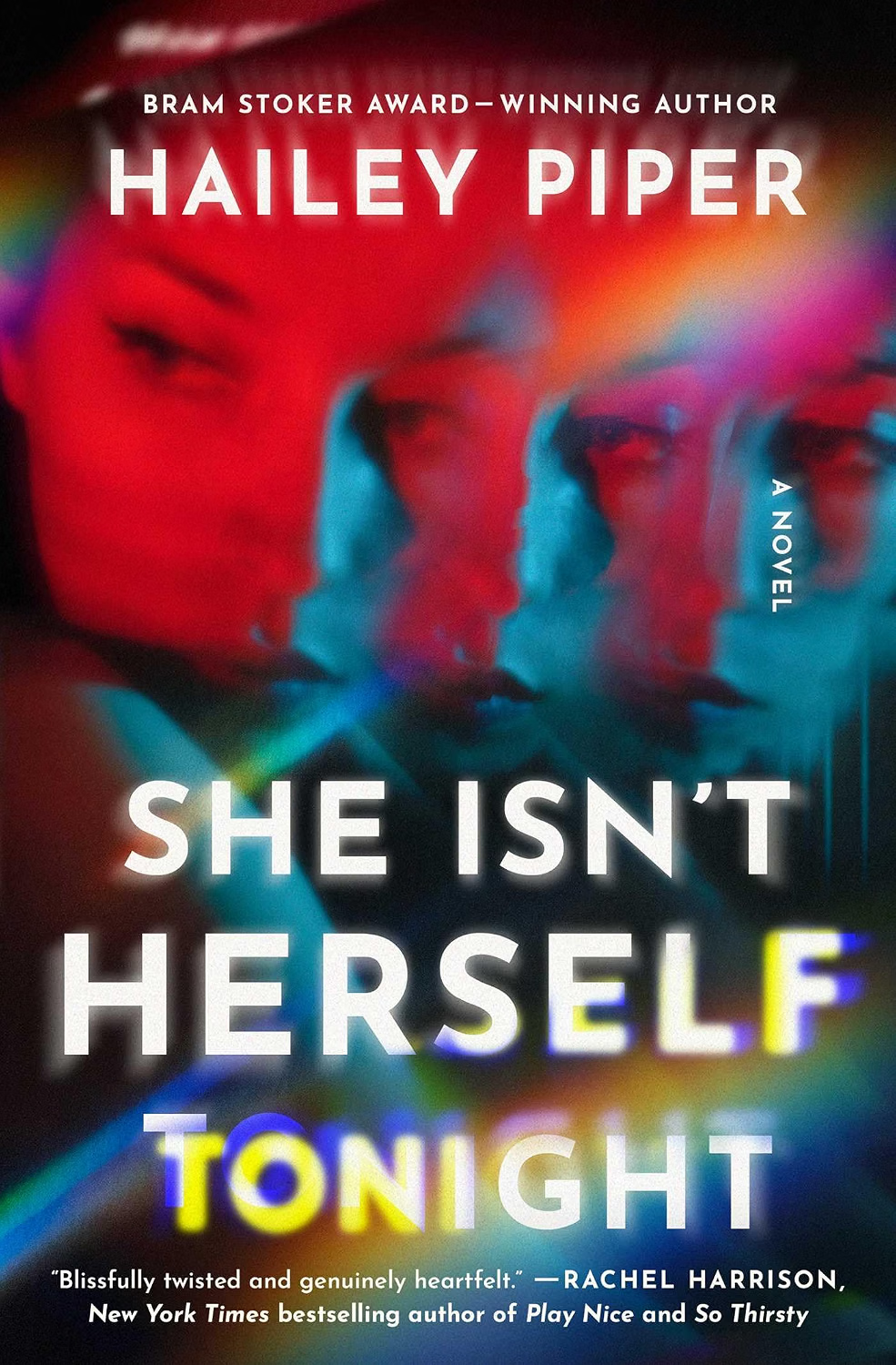

She Isn’t Herself Tonight makes alien abduction part of an intimate story about heartbreak, family hurt and the unnerving feeling of being out of place in your own life. Hailey Piper builds its horror around Rabbit, a woman who expects extraterrestrials to return every ten years. As her 31st birthday draws near, the anticipated visitors are late—and the rest of Rabbit’s life is coming apart.
The novel is by Piper, the Bram Stoker Award–winning author of Queen of Teeth and A Game in Yellow. Rachel Harrison, author of Play Nice, describes it as “blissfully twisted and genuinely heartfelt.” Readers drawn to You Weren’t Meant to Be Human and Our Wives Under the Sea may also find its blend of literary horror and speculative unease appealing.

Rabbit’s pattern breaks
Rabbit says she was taken by aliens when she was ten, then again at twenty. At thirty, she expects another visit as the decade turns. Instead, her long-term boyfriend ends their relationship, tells her she is “too much work” and sends her out of their shared home. She ends up in a small rented room, while the upheaval begins to affect her job as well.
The timing makes the breakup feel like more than one loss. Rabbit is counting down to a birthday that has marked earlier abductions, trying to make sense of what the next visit might mean while she has nowhere familiar to settle. Her mother is due to visit, too, adding another source of pressure just as Rabbit’s confidence and sense of safety begin to fracture.

As the birthday approaches without the expected return, Rabbit grows increasingly paranoid. Strange bodily transformations unsettle her, and even her reflection seems to develop a will of its own. The details turn a familiar crisis—losing a partner and a home—into something uncanny. The question of whether the aliens will come back sits alongside a more immediate one: can Rabbit regain her footing when the world around her no longer feels reliable?
Alienation has a history
Rabbit’s difficulties aren’t limited to the recent breakup. After she told her mother about the first abduction, her mother rejected Rabbit’s account and insisted that the visitors were angels. She then took her daughter from church to church and around the country, presenting the story to people willing to listen. The tale became lucrative, but Rabbit’s experience within it was shaped by her mother’s repeated belittling.

That history gives the novel’s central relationship its emotional force. The boyfriend’s remark that Rabbit is too much work echoes the criticism she has heard from her mother. It leaves her facing a painful question: is she difficult to love, or has she been taught to see herself that way? Piper’s portrait, as described by the reviewer, keeps Rabbit’s questionable decisions in view while also making room for her sincerity and distress. Her strangeness doesn’t erase her vulnerability; it makes her feel like a person struggling to stay oriented.
The reviewer sees Piper’s prose as a major strength, describing it as almost hypnotic and easy to sink into, even when the subject matter turns bleak. That quality suits a story in which Rabbit’s perception grows less steady. The writing can draw readers into her disorientation instead of keeping the fear at a distance, making the shifts in her inner and outer worlds part of the reading experience.
Horror as a search for belonging
The alien motif works on both a literal and an emotional level. Rabbit has been abducted and subjected to probing and implants, yet she feels most protected and understood in the aliens’ presence. The people closest to her have often made her feel foreign; the beings who take her away offer a troubling kind of home. Piper turns that reversal into the novel’s sharpest idea: what if the place that frightens everyone else is the only place Rabbit feels accepted?
Her changing body carries the same uncertainty. The transformations suggest she may be becoming something different, perhaps something greater—or discovering what she has been all along. The story leaves that possibility suspended within its horror, tying the physical changes to Rabbit’s struggle to understand herself. The effect is unsettling without reducing the character’s crisis to a puzzle to solve.
The reviewer rates the novel 8.5/10 and calls Rabbit an endearing, compelling lead: an unusual woman who can make baffling choices and still feel heartfelt and genuine. For readers who want their science fiction threaded through character-driven horror, She Isn’t Herself Tonight offers a tense, offbeat take on alienation. Its lingering question is whether Rabbit can find a sense of home before the visitors return—or whether the upheaval has already begun to change what home means to her.