In lane Publishing Industry
Speaking Up in Two Middle-Grade Novels About Courage and Consequences
Description
Two new middle-grade novels, one about a teacher's grooming and one about a prank gone wrong, show kids weighing silence against doing what's right.

Middle-grade fiction has always been good at dramatizing the moment a kid has to choose between fitting in and doing the right thing. Two new releases take that choice seriously, and they land on opposite ends of the emotional scale. One is quiet and unsettling. The other is funny, warm and full of friendship drama. Both put a young narrator in a position where staying silent is easier than speaking up.
A teacher's trust, and the slow realization that something is wrong
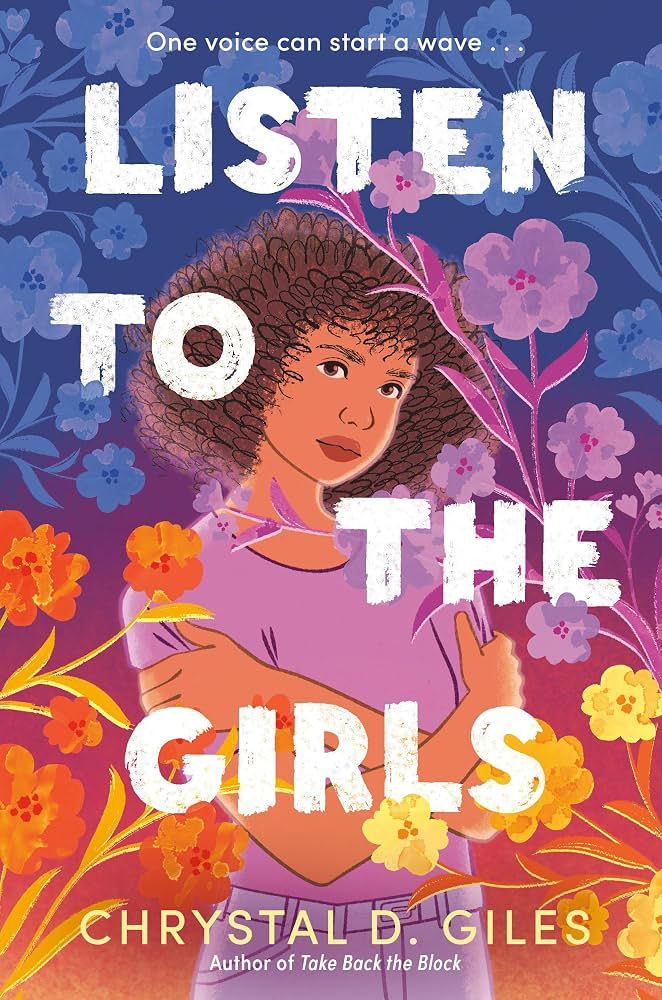
Listen to the Girls by Chrystal D. Giles, published by Random House Books for Young Readers (256 pages, grades 5-8), follows Calla over a summer that starts out uneventfully. Her favorite seventh-grade teacher, Mr. Chavis, has been accused of sexual harassment by girls at his former school, and that news changes Calla's plans. Encouraged by a social media influencer, Calla and her two best friends start an account called Listen to the Girls. They invite students at their own school to share their experiences honestly.
What makes the novel work is how gradually the picture sharpens. As more stories surface, Calla starts learning what grooming looks like and how it operates. She begins to see that Mr. Chavis's requests for secrecy and his behavior toward her weren't harmless quirks. Giles doesn't rely on melodrama to show this. The reviewer who covered the book admitted to waiting for a big reveal that never came, and then concluded that the lack of spectacle is the point. Predatory behavior often works precisely because it looks ordinary from the inside, and a reader who has been braced for a bombshell may feel the same disorientation Calla does.
The ending turns on a hard question: keep quiet, or become the first person at her school to name what happened. I won't spoil how Calla answers it, but the book treats that decision as a real cost rather than a tidy victory. The reviewer's takeaway was that the novel makes a strong case for teaching children early and clearly about appropriate and inappropriate behavior between kids and adults. That's a conversation many parents and teachers find uncomfortable, which is exactly why a story like this can open it. An author's note at the back adds context and resources for reporting harassment, which makes the book useful beyond the reading experience.
A prank, a missing rabbit and a friendship on the line
More Trouble Than It's Worth by Lisa Moore Ramée, from HarperCollins (272 pages, grades 4-7), returns to Shayla, who first appeared in A Good Kind of Trouble as she entered junior high and started sorting out friendship and romance. This time she's at the end of the summer before eighth grade. She's on her club track team, hoping to reach the Junior Olympics, and spending time with three new friends who enjoy pranking rival teams.
Shayla goes along with the pranks even though they make her palms itch with nerves. The trouble starts when Bernard suggests targeting their friend Neela by taking the stuffed rabbit she carries everywhere. Shayla agrees, partly because Neela has been asking for a prank of her own. Then the stakes shift. The rabbit was a gift from Neela's late older sister, whose death was never solved or investigated. Now the rabbit is missing, and Shayla is convinced that admitting what she did will cost her every friend she has. The book's tension comes from that gap between a playful act and the real weight it carries for someone else.
The reviewer noted that the book is technically a sequel but reads comfortably on its own, which is useful for readers who want to start here. Shayla's dilemma, fitting in versus standing up for what's right, is a classic middle-school struggle, and Ramée handles it with the same attention to friendship dynamics that made the first book work. The reviewer also pointed out that Shayla feels pulled to speak up about Neela's sister on social media as well, and that tension between wanting to be seen and dreading the spotlight gives her arc real texture. By the end, the reviewer felt Shayla seems ready for eighth grade, and hoped the setting would carry into a third book.
Why these two books belong together
On the surface these novels couldn't be more different. One deals with abuse of trust, and the other with a prank that goes too far. But both are built on the same engine: a child notices that something is off, feels the pull to stay quiet because speaking up is frightening, and has to decide whether to act anyway. That's a useful pairing for a book club, since it invites readers to compare how the stakes change the weight of silence. A prank that hurts a friend and a teacher who exploits a student's trust sit on very different points of the moral scale, yet both narrators learn that keeping a secret has a price.
For parents and teachers choosing between them, the age ranges offer a starting point. The Giles novel's grades 5-8 range and its subject matter suggest it's better suited to readers who can handle direct discussion of grooming, with the author's note as a natural entry point for conversation. Ramée's book, aimed at grades 4-7, is lighter in tone and easier to hand to a younger reader who is still sorting out loyalty and fairness. The real pleasure of both is that neither tells its young narrator what to feel. They trust readers to recognize the moment when a choice stops being abstract.