In lane Publishing Industry
The Guernsey Literary and Potato Peel Pie Society: Letters, Books and Postwar Life
Description
Mary Ann Shaffer and Annie Barrows pair a lively exchange of letters with an honest portrait of Guernsey after wartime occupation.

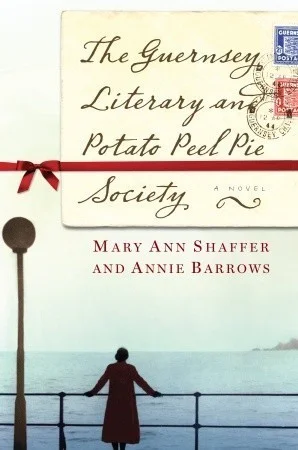

Books bring people together in The Guernsey Literary and Potato Peel Pie Society, but its letters also make room for the experiences people carry after war. Set in January 1946, Mary Ann Shaffer and Annie Barrows’s novel follows writer Juliet Ashton as a correspondence with residents of Guernsey draws her toward an island community still living with the effects of German occupation. The result is warm and funny, with a clear-eyed thread of grief and hardship beneath its literary charm.
A society born from an alibi
Juliet first hears about the society from Dawsey Adams, a Guernsey resident who finds her name in a book by Charles Lamb. Their exchange introduces her to a group whose unusual name has an unlikely origin: its members invented the society as an impromptu excuse after being caught breaking curfew. What begins as a curious story opens a window onto the people who formed it, their reading habits and their lives on the island.
The letters gradually sketch a community of varied personalities, including pig farmers and phrenologists, whose shared interest in books is one part of a much larger story. Their accounts describe how occupation shaped everyday life and left memories that have not simply faded with the arrival of peace. Children were sent away; people endured deprivation and witnessed events that remain difficult to forget. Alongside those recollections are moments of wit, eccentricity and companionship.
That mix gives the novel its emotional balance. The characters have room to enjoy a return to ordinary social life, even as rationing and coupons remain part of the postwar routine. Their stories also show resourcefulness under pressure and the ways people adapt when familiar freedoms are taken from them. Shaffer and Barrows let humour and pain sit close together, without making either one feel like decoration.
Why the letters work
The epistolary form lets the story unfold through different relationships and points of view. Juliet’s correspondence with Guernsey residents brings one set of details; letters to friends, relatives, agents and acquaintances add others. The structure could easily feel like a sequence of disconnected recollections, but the shifting correspondents help the novel build a coherent picture of the island and its people.
Letters also suit a book concerned with the slow work of getting to know someone. Juliet doesn’t receive a single authoritative account of Guernsey. Instead, she pieces together a community through personal memories, passing observations and stories shared between people who trust one another. The format gives each character a chance to sound distinct, and allows news to travel naturally through the plot. It makes the act of writing feel like part of the relationships, rather than a device imposed on them.
The novel’s pace and form may appeal to readers who enjoy character-led historical fiction, especially those drawn to books about literary friendships and close-knit communities. Its humour makes the cast inviting, while the subject matter gives their stories weight. The difficult experiences remain central, but the book doesn’t reduce its characters to what they endured.
Juliet and the island
Juliet is a spirited lead: determined, intelligent and curious about the people she encounters. As the correspondence deepens, she becomes increasingly attached to the island and its residents, and that affection runs both ways. Her confidence makes her engaging, though the reviewer found some of her later choices less convincing, particularly those involving Kit. Juliet’s early plan around the child also struck the reviewer as an act of unjustified entitlement. Those reservations add friction to a character who might otherwise be too easy to admire.
Mark, who wants to direct Juliet’s choices and tell her what is best, is another source of tension. The contrast helps bring out her independence and makes her relationship to her own ambitions part of the book’s appeal. The reviewer was less persuaded by some of Juliet’s actions as the story developed, but felt the characters’ relationships came together by the end.
There’s a small pleasure in watching Juliet’s first curiosity turn into a deeper bond with the island. She learns about Guernsey through the people who live there, not through a detached survey, and her growing attachment gives the novel a strong emotional thread. Readers who prefer protagonists whose choices invite debate may find Juliet more interesting for her flaws.
The audiobook and the reading experience
The audiobook runs for 8 hours and 06 minutes, with Juliet Mills, Susan Duerden, Rosalyn Landor, John Lee and Paul Boehmer narrating. The reviewer gave the book four stars and praised the performances, finding that multiple narrators suited a story built from correspondence. Their changing voices help distinguish the letters and keep the cast vivid in audio.
That format also preserves the particular rhythm of written communication. In the reviewer’s view, letters carry the story smoothly, while spoken emails can sometimes interrupt the spell of an audiobook. Here, the exchange of personal news is central to how the characters become known to one another, so the form supports both the plot and the listening experience.
The Guernsey Literary and Potato Peel Pie Society was published in print on 29 July 2008. The audiobook release is dated 23rd August 2018 and is listed under Random House Audio Publishing Group; the print edition is listed with Dial Press. The print edition runs to 291 pages. For readers who enjoy stories where books spark unexpected connection, this one offers an inviting cast and a thoughtful account of how a community lives with its recent past.