In lane Book Reviews
Gabriel Farrell’s The Worth of Scars Pairs Dark Magic With a Fractured Band of Misfits
Description
Gabriel Farrell’s grimdark debut has a striking self-harm-fueled magic system and memorable relationships, though its length and pacing blunt the impact.



A vivid premise with a steep price
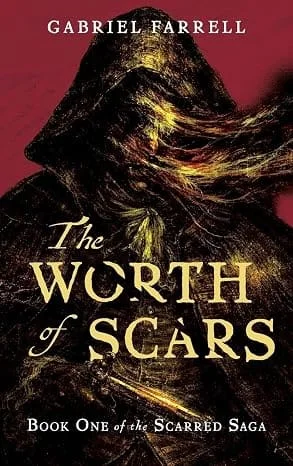
Gabriel Farrell’s epic fantasy debut, The Worth of Scars, builds its central magic around a disturbing bargain: people gain sorcerous power by mutilating themselves, and greater sacrifice is said to bring greater strength. That idea gives the novel an immediate hook. The reviewer was drawn to the promise of magic shaped by pain, cost and personal choice, and the title’s grim premise suggests a story willing to make power feel physically consequential.
The book follows an unlikely company gathered by Kornelius, an ancient wizard who once helped defeat humanity’s old enemy, the Serafin. Rumors say the Serafin have returned, and Kornelius believes this mismatched group may be needed to stop them. Its members include a bookish young man, a brothel madam, an aristocrat, a disgraced soldier who has turned to recruiting and performance, a mercenary, a widow and a war hero. They share guilt and trauma more readily than trust, and their mysterious patron expects them to travel to the continent’s center to confront forces described as gods.
To have any chance against the Serafin, they must consider becoming Scarred: sorcerers who wield the enemy’s corrupted power at the cost of bodily harm and social rejection. The question is clear and compelling. Whether the world can be saved may depend on people choosing to damage themselves for abilities they can barely understand.
Where the promise loses force
For this reviewer, the premise doesn’t do enough to distinguish the novel from familiar epic fantasy. An ancient threat returns; an ancient wizard assembles a band of reluctant heroes; the group sets out on a perilous quest. Kornelius may occupy the familiar role of the venerable guide, but the more unusual element is the grim magic. The trouble is that the book doesn’t give that element enough weight once the journey begins.
Characters make the required sacrifices by cutting off fingers or toes, tearing skin from their arms, slicing their faces or, in one instance, stabbing themselves in the buttocks. Yet the reviewer found that these acts rarely carry the emotional or practical consequences the premise seems to promise. Some abilities allow a character to fight more effectively or see farther. Others are described as healing or destructive, but the reviewer wanted to see the main cast use their powers in more distinctive ways, with victories that made their sacrifices feel essential.
The novel does include large set pieces in its later stretch, and the reviewer praises Farrell’s battle writing. Still, the Scarred abilities seldom seem central to those successes. By the time the story reaches an anticlimactic finish, the reviewer didn’t feel that Kornelius’s new sorcerers had played a decisive role in saving the world. The magic that first made the book so enticing can end up feeling like a side detail.
Length and pacing add to that frustration. The reviewer describes the book as overlong, with stretches of background information that slow the action, minor characters who reappear long after their introductions, and flashbacks extended across multiple chapters. Farrell, in the reviewer’s view, often interrupts the story’s momentum just as a scene begins to gather interest, and repeats information that could have been delivered more briefly.
Relationships give the journey life
The reviewer’s strongest praise goes to Farrell’s handling of the group’s relationships. Bonds form gradually among these wary travelers, and trust, secrecy and suspicion create friction between Kornelius and the people he has recruited. The sea voyage stands out: the group travels aboard a ship captained by a man the reviewer regards as questionable, while withheld truths deepen divisions aboard the vessel.
Ziggy and Petar’s connection is another highlight. Their friendship grows over the difficult journey, but it rests partly on Ziggy’s self-interested attempt to ease his guilt. The reviewer found that tension affecting, especially as hidden links between the two threaten to undo what they have built. Vera’s history also gets a positive mention. Her past as a sex worker and brothel madam, and the alliances she has had to navigate to preserve her independence and control over her life, give her a more textured place in the story.
A dark fantasy for readers who weigh the caveats
The source review gives no numerical rating, and its recommendation is qualified: it sees worthwhile character work and some strong action, but considers the book too bloated and uneven to recommend. Farrell’s ability to connect his cast is a real strength, yet the novel’s pacing and the underdeveloped payoff of its magic system keep those strengths from adding up to a fully satisfying whole.
The Worth of Scars is described as grimdark fantasy, and its self-harm imagery is frequent and graphic. The book’s central magic requires self-mutilation from the outset, so this is a prominent feature rather than a late revelation. The author’s warning asks readers who have experienced self-harm or suicidal ideation to consider carefully whether the novel is right for them.
Readers drawn to dark fantasy’s hard choices, fractured friendships and ensemble quests may find elements to appreciate, especially in the character dynamics. The reviewer’s central reservation is that the novel’s most memorable idea needs more room to shape the characters’ abilities and the outcome of their journey. A tighter edit and more striking demonstrations of the magic’s cost could have made its premise land with greater force.