In lane Book Reviews
Alix E. Harrow’s The Slantwise Histories Finds Magic in Stories of Escape
Description
Alix E. Harrow’s varied collection pairs folklore and strange magic with stories of people pushing back against the forces shaping their lives.
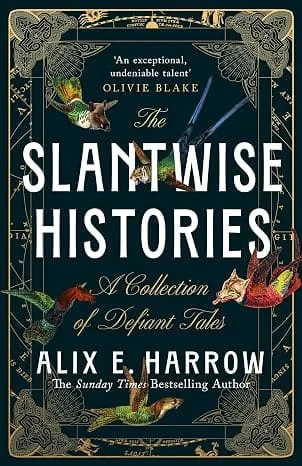
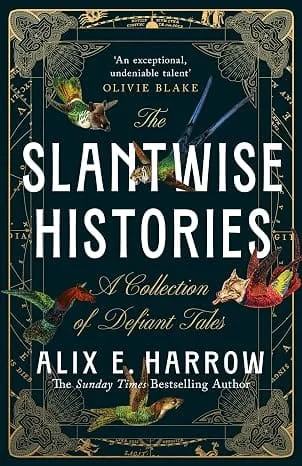
Alix E. Harrow’s The Slantwise Histories makes a case for the short story as a way to look at familiar truths from an unexpected angle. The collection moves among folklore, fantasy, dystopia and stories of ordinary magic, with characters who have been pushed to the edges of the world finding their own ways through it. For this reviewer, it’s the year’s standout story collection: its forms and moods shift, but its interest in escape, resistance and reclaimed power gives it a strong centre.


A collection with room to change shape
Harrow’s stories stretch from ancient battlefields and underworlds to neon-lit attractions beside an American freeway. Some follow tricksters or ghosts; others bring werewolves, steel mills and the pressures of everyday life into view. The variety is part of the appeal. As the reviewer observes, Harrow can change style, tone and atmosphere to suit each tale, moving between fairy-tale wonder, bleakness, love and anger without making the collection feel like a single story told eight different ways.
The book’s central idea is captured in the reviewer’s question: “But what’s a legend, except a history told slantwise?” These stories turn attention towards people often left at the margins: women, workers, soldiers and mothers. Their histories may be painful, but the reviewer sees the collection as more than a catalogue of suffering. Again and again, it follows those who find an opening, break a rule or leave with enough resolve to make their departure matter.
Standout stories and sharp turns
The reviewer’s favourite is The Tale of the Two Brothers, Or, The Famous Folklorist Confesses Fratricide! Its appeal comes from a satisfying plot, distinctive character voices and an emotional arc that lands with heartbreak. One exchange captures the story’s quick edge: “Why not men?” Jack asked, stung. “Because men are so often the reason we need teeth in the first place.” The line is funny and pointed, and the reviewer singles it out as a memorable moment.
Mr. Death offers a more hopeful mood than its title might suggest. The reviewer connects it to Grim Tidings by BK Borison, a recent read, while emphasizing that Harrow’s story has its own place in the collection. That contrast between ominous naming and a hopeful impression suits a book that repeatedly lets familiar genre signals take an unexpected turn.
For a lighter register, The Ransom of Miss Coraline Connelly is brief, funny and sweet. Its tongue-in-cheek voice reminded the reviewer of Lemony Snicket, and its epistolary form gives the tale a playful frame. The quoted image of Miss Connelly roaming the halls of a palace “like a misplaced sunbeam” sums up that blend of charm and mischief.
Two previously read stories also earn a mention. The Knight and the Butcherbird is described as gritty dystopian fantasy, featuring a demon and her wife. Its reflection on change—“You change because you get sick. Because you have to.”—fits the collection’s interest in transformation under pressure. The Six Deaths of the Saint, which inspired The Everlasting, is heartbreaking and time-bending, according to the reviewer.
Stories about escape, and one weaker link
The Final Voyage of The Good Ship Fortune contributes a quieter thought about the limits of trying to force the world into better behaviour. Its narrator recalls wanting to “bully the world into better behavior” before recognizing that throwing oneself against it won’t change it. The line offers a useful counterweight to the collection’s recurring acts of defiance: bravery matters, but these stories also make room for the cost of struggling against forces larger than oneself.
The Long Way Up retells the Orpheus and Eurydice myth. Having recently watched Hadestown, the reviewer enjoyed encountering another adaptation of a story that continues to invite fresh interpretations. A Witch’s Guide to Escape: A Practical Compendium of Portal Fantasies takes a different route into the theme, serving as a tribute to libraries, reading and the refuge books can offer. Its defence of escapism speaks to readers who have found comfort and possibility in imagined worlds.
The collection has a weaker patch for this reviewer: Dustbaby, the shortest story, also proved the least satisfying. That unevenness doesn’t undo the strength of the favourites, and the reviewer’s assessment is that several stories reached five-star quality while most were strong four-star reads. The figures are left as personal impressions, not a claim that every story will land the same way for every reader.
What holds the book together is Harrow’s way of letting social and cultural commentary rise through story, rather than spelling out a lesson. The reviewer sees recurring themes of resistance, reclaimed power and the courage to go against the grain. Readers drawn to folklore reworked with feeling, genre shifts and characters seeking a path out of constraining circumstances will find plenty to follow here. The collection’s most lasting invitation may be to look again at whose histories get told—and what changes when they’re told at an angle.