In lane Publishing Industry
Celebrating Grace Hopper: A Trailblazer in Computer Science
Description
Explore the remarkable life and legacy of Grace Hopper, a pioneering figure in computer technology and programming.
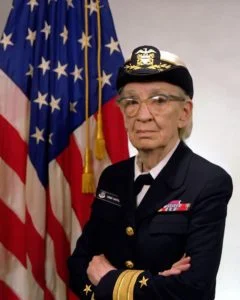
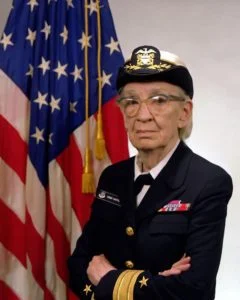
Grace Hopper, born on December 9, 1906, in New York City, became one of the most influential figures in the field of computer science. Her journey from a mathematics professor to a pioneer in programming technology exemplifies her innovative spirit and dedication to the advancement of computing.
Early Education and Teaching Career
After obtaining her B.A. from Vassar College in 1928, Hopper pursued further studies at Yale University, earning her M.A. in 1930 and Ph.D. in 1934. Her academic excellence led to a teaching position at Vassar College, where she inspired countless students in the field of mathematics. Her passion for teaching and research laid the groundwork for her future contributions to the computing world.
Military Service and Early Computing Innovations
In 1943, amidst World War II, Hopper joined the Naval Reserve and was assigned to the Bureau of Ships Computation Project at Harvard University. This transition marked a significant turning point in her career, as she became part of a team that worked on the IBM Automatic Sequence Controlled Calculator, better known as the MARK I. This groundbreaking machine was the first electromechanical computer in the United States, and Hopper’s contributions were instrumental in its operation. She emerged as one of the first three programmers of this remarkable device.
During her time with the MARK I, Hopper didn't just contribute her programming skills; she also authored a comprehensive 561-page user manual, showcasing her deep understanding of the machine and its capabilities. Her efforts in this role highlighted her technical expertise and marked her as a key player in the development of early computing systems.
Post-War Contributions and Compiler Development
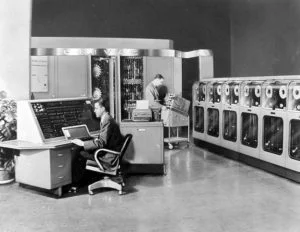
Following the war, Hopper turned down a prestigious professorship at Vassar, choosing instead to continue her pioneering work in computing. From 1946 to 1949, she worked on the MARK II and MARK III computers under Navy contracts, providing critical insight into the evolution of these systems. Her experience with the UNIVAC I and II reinforced her desire to push the boundaries of what computers could achieve. It was during this time that she began to explore the concept of automatic programming and various ways to utilize computer code more effectively.
One of Hopper’s most significant contributions came in 1952 when she developed the first compiler, named A-0. This breakthrough innovation was a critical step toward creating modern programming languages, allowing programmers to write code in a more accessible manner. Her choice to coin the term "compiler" has had a lasting impact on the field of computer science, shaping the language and processes that continue to evolve today.
A Lasting Legacy in Technology
Hopper continued to work on compiler technology throughout her career, retiring from UNIVAC, a division of Sperry Rand, in 1971. Her retirement did not mark the end of her influence; she retained her role as a naval reservist and achieved the rank of rear admiral at the age of 79, becoming the oldest serving officer in the U.S. Armed Forces. This honor underscored her dedication to both her country and her field.
After her military retirement, Hopper transitioned to a senior consultant position in public relations at Digital Equipment Corporation, where she continued to advocate for women in technology and inspire future generations until her passing on January 1, 1992, at the age of 85. Her lasting contribution to computer science is evident, as she played a crucial role in the development of programming languages and computing practices as we know them today.
Honoring Grace Hopper
Grace Hopper's legacy is one of resilience, innovation, and empowerment. Her burial with full military honors at Arlington National Cemetery is a fitting tribute to a woman who broke barriers and opened doors for so many in a field that, at the time, was largely male-dominated. Today, she is remembered not only as a brilliant computer scientist but also as an inspiring figure who championed diversity and inclusion within the tech industry.
Hopper's story serves as a reminder of the vital role women have played in technology and encourages new generations to embrace careers in STEM fields. Her journey continues to inspire countless individuals to push the envelope of what is possible in computer science.