In lane Publishing Industry
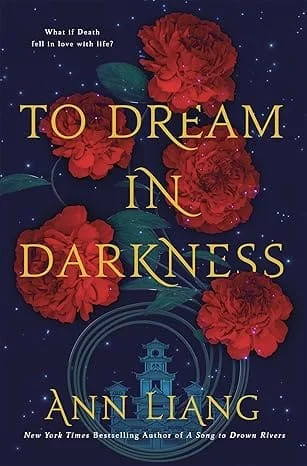
Ann Liang’s To Dream in Darkness Pairs a Slow-Burn Romance with Celestial Fantasy
Description
Ann Liang’s tale of a healer, the God of Death and a missing prince offers an evocative setting and an engaging second half.


A bargain with a deadline
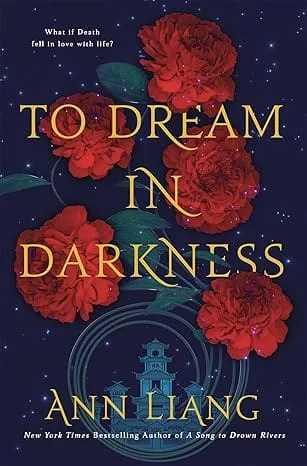
In To Dream in Darkness, Ann Liang sets a divine dispute in motion with a bargain that leaves both parties exposed. Rujia, a noble God of Healing, asks Death for a month before he carries out the fate she expects at his hands. In return, she’ll try to free him from a curse that has tormented him for a century. The arrangement gives the story its central tension: Rujia is buying time, while Death has never been the sort to miss his appointed task.
The deal quickly expands beyond the pair. Rujia’s attempt to secure that reprieve brings about the collapse of the Celestial Palace and the disappearance of the crown prince, whom the other gods cherish. Now the healer and Death are blamed, and their best chance of escaping the consequences is to cross the realms and bring the prince back safely. Liang’s premise turns a personal bargain into a journey with wider stakes, while keeping its focus on two uneasy companions whose motives don’t quite align.
Romance built on expectation
The book moves at a measured pace, and the romance follows suit. There’s banter and a sense of growing familiarity between Rujia and Death, but I wanted more yearning to make the slow burn land. The attraction eventually develops, though for me the story leans on familiar romantic turns to bridge the distance between its earlier stages and that shift. Readers who enjoy recognizing the shape of a romance may find those cues satisfying; I found the relationship less affecting than its setup promised.
That reservation matters especially because Liang’s leads are positioned to carry so much of the emotional weight. Rujia is ambitious and kind-hearted, a combination that gives her choices some tension: she is willing to bargain with Death, yet her role as a healer suggests a deep investment in other lives. Death, meanwhile, begins as a figure defined by certainty and the task he has never failed to complete. Watching that certainty weaken creates an appealing question about what the two might become to each other, even when the romantic build didn’t provide enough longing for my taste.
“All souls are malleable. They’re like flowers. A seed that has been planted into rich soil and watered every day and faced out into the sunlight will grow to become something wholly different from a seed planted in the dark. That is the case, even if the seeds were to be identical.”
The passage offers a useful key to the story’s interest in change. Its image of souls shaped by what surrounds them speaks to the gap between a person’s beginnings and what they may grow into. It also gives the book a gentler counterpoint to the threats in its premise: a story populated by gods and celestial royalty still has room for the conditions that help people change. The idea suits a pairing in which Death’s resolve shifts and Rujia’s effort to control her future draws her into consequences she couldn’t neatly contain.
A vivid world, then a fresh turn
Although the book has romantic elements, I wouldn’t describe it as romantasy in the traditional sense. The relationship is part of the appeal, but the journey and the divine setting have their own momentum. The historical atmosphere, with wandering gods, celestial princes and mortals who seem fragile by comparison, gives the tale a distinct mood. Liang makes that world easy to enter, and I finished the novel during a single train journey, carried along by its accessible storytelling.
The second half also changes the feel of the plot. It plays almost like a new story opening inside the first, a turn that helped keep my attention when the early pace was slow. That shift gives the book room to move beyond the initial bargain and its romantic expectations, adding freshness without losing the central pair. I found this later stretch more engaging, and it helped the novel feel like more than a familiar courtship unfolding against a fantasy backdrop.
Readers who know Liang’s A Song to Drown Rivers may recognize some predictable beats. That familiarity may soften the surprise, particularly for anyone hoping for a romance that departs from expected patterns. Still, the setting is evocative, the central arrangement is compelling, and the change of direction in the latter half gives the story a satisfying lift. My read is that To Dream in Darkness works best for readers drawn to immersive divine fantasy and gradual character shifts, with the romance providing a thread through the journey rather than its strongest source of tension.