In lane Book Reviews
The Buddy Snatchers Review: Addiction, Old Friends and Adirondack Horror
Description
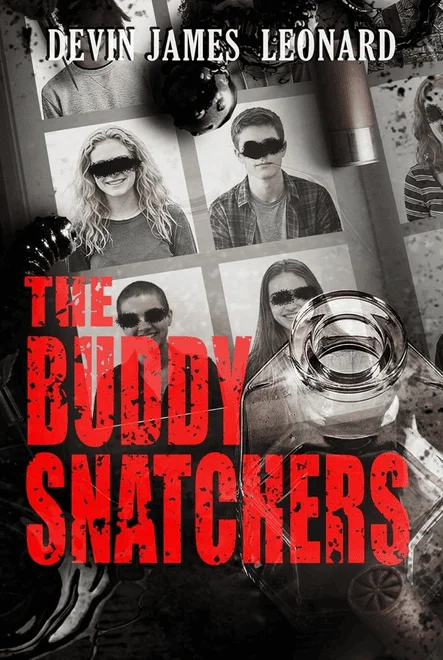
Devin James Leonard pairs small-town creature horror with an uneasy portrait of addiction, friendship and the selves people perform.
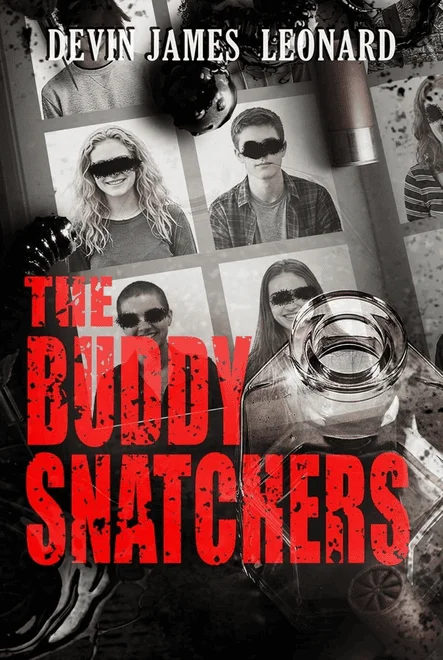



Old friends, new selves
In Devin James Leonard’s The Buddy Snatchers, the threat in a small Adirondack village comes with an uncomfortable question: how can Cal McCarthy tell whether his old friends have been replaced when a decade apart has already made them strangers? The creature brings the body horror, but the novel’s more personal unease grows from the gaps between memory, identity and the people everyone wants to appear to be.
Cal is 28, alcoholic and hoping to stay sober through his ten-year high school reunion. He has a particular reason to go: Meredith, his former girlfriend, is there, and he imagines that winning her back might be possible. Reconnecting with his old circle quickly complicates that plan. Something has reached the townspeople, changing their minds and taking over their bodies. Cal and his friends must work out who is infected, who is pretending, and who has simply changed over the years.
The premise gives Leonard room to make suspicion do double duty. In a body-snatcher story, a familiar face may conceal a hostile presence; in Cal’s life, familiarity is already unreliable. The friends he remembers have had ten years to become different people, while Cal’s own account of himself is shaped by denial and wishful thinking. The supernatural danger sharpens an ordinary social anxiety: what if the people closest to you are no longer who you thought they were?
Cal and the people around him
The review’s strongest praise is for Leonard’s depiction of Cal’s alcoholism. His self-serving reasoning, denial and selfishness can make him an unpleasant companion. The reviewer says those qualities may ring true to readers familiar with addiction, while also acknowledging that this portrayal could be difficult for people who have lived with someone like him. Cal’s flaws shape the reading experience; they aren’t smoothed over to make him an easy hero.
Alicia, his best friend, sees those flaws up close. She keeps giving Cal chances because she cares about him, even as his behavior leaves her frustrated and angry. That loyalty has consequences beyond their conversations: the strain reaches her business and her marriage. The friendship therefore carries real weight in the story, complicating any simple account of Cal as someone whose choices affect only himself.
Leonard assembles the rest of Cal’s circle from recognizable high school types: Harris, once overweight and unsuccessful, and Sutherland, the former jock. Gina, her friend Lexi and Meredith also turn up at Cal’s house before the reunion. The shifting distance between these people and their younger selves gives the book’s theme of performance a foundation before the creature takes center stage. Some changes are genuine; others may be acts. Cal is poorly equipped to tell the difference.
Kalvin, a much older character, adds comic relief through behavior the reviewer describes as both creepy and believable, even when it becomes ridiculous. His scenes contribute to the book’s uneven but deliberate mix of uncomfortable humor and horror. The effect will depend on whether a reader finds absurdity a welcome release or a distraction from the menace.
Where the horror turns
The creature appears in the opening chapter, then recedes from attention for more than half the book, apart from a few hints. Leonard spends much of that stretch establishing Cal and the people around him. Once the story shifts into its faster second half, it races toward an ending that leaves several matters open. The review suggests that readers expecting the reunion itself to supply a major set piece may find its night rushed.
The village setting helps make the threat feel close. Cal’s life connects the story to local institutions and routines, including his probation officer Booker and an Alcoholics Anonymous meeting where he meets another man. These details give the small community texture while keeping the drama tied to Cal’s attempt to stay sober. The setting’s compactness also suits a story in which a threat can be close at hand and every acquaintance might invite suspicion.
The creature is presented as grotesque, with a life cycle the reviewer compares to real parasites and an infection process described in graphic detail. Some of the methods used to defeat it are entertaining, though the reviewer finds they conflict with other details. Readers who pay close attention to the story’s internal mechanics may notice those inconsistencies.
The first-person narration presents another trade-off. Cal’s voice keeps the novel close to his limited, compromised perspective, but there are moments when that choice strains credibility. The reviewer points in particular to detailed scenes Cal recounts while saying he was blackout drunk and cannot remember what happened. That mismatch can interrupt the story’s flow.
A darkly comic take on being taken over
Leonard’s book draws on the fear that someone familiar may no longer be themselves, and extends it to Cal’s own circle: a group can change until the person who once belonged feels like an outsider. The story also raises the more intimate fear of losing command of your own life. Those themes sit naturally beside Cal’s addiction, even when the supernatural elements take the lead.
The reviewer’s reservation is that some pivotal moments tilt toward dark humor instead of sustaining fear. That choice lets Leonard underline how foolish and self-absorbed the characters can be, but it may also make already difficult personalities harder to tolerate. Readers looking for unbroken dread may be less satisfied than those happy to see horror punctured by absurdity.
The review places The Buddy Snatchers closer to The Faculty than to Jack Finney’s novel or its adaptations, and sees a thematic kinship with the Irish comedy horror film Grabbers. That comparison signals the book’s blend of invasion, character comedy and creature feature. Fans of that mix are likely to find something to enjoy, even if the pacing, humor and unresolved ending won’t work equally well for everyone.
The book’s most revealing question is also its oddest: what happens if the people least able to manage themselves are the ones who notice that their neighbors are being taken over? Cal’s messy perspective makes that an uneasy premise for both horror and comedy. Readers who enjoy flawed characters, small-town paranoia and a creature story with room for laughs may find Leonard’s take worth the trip.
Read Devin James Leonard’s essay on Crystal Lake’s Patreon, where he discusses the unconscious inspiration behind The Buddy Snatchers and how well we know the people around us.