In lane Genre Fiction
Donna Morgan’s Ember and Steel Blends Dark Fantasy, Slow-Burn Romance and Found Family
Description
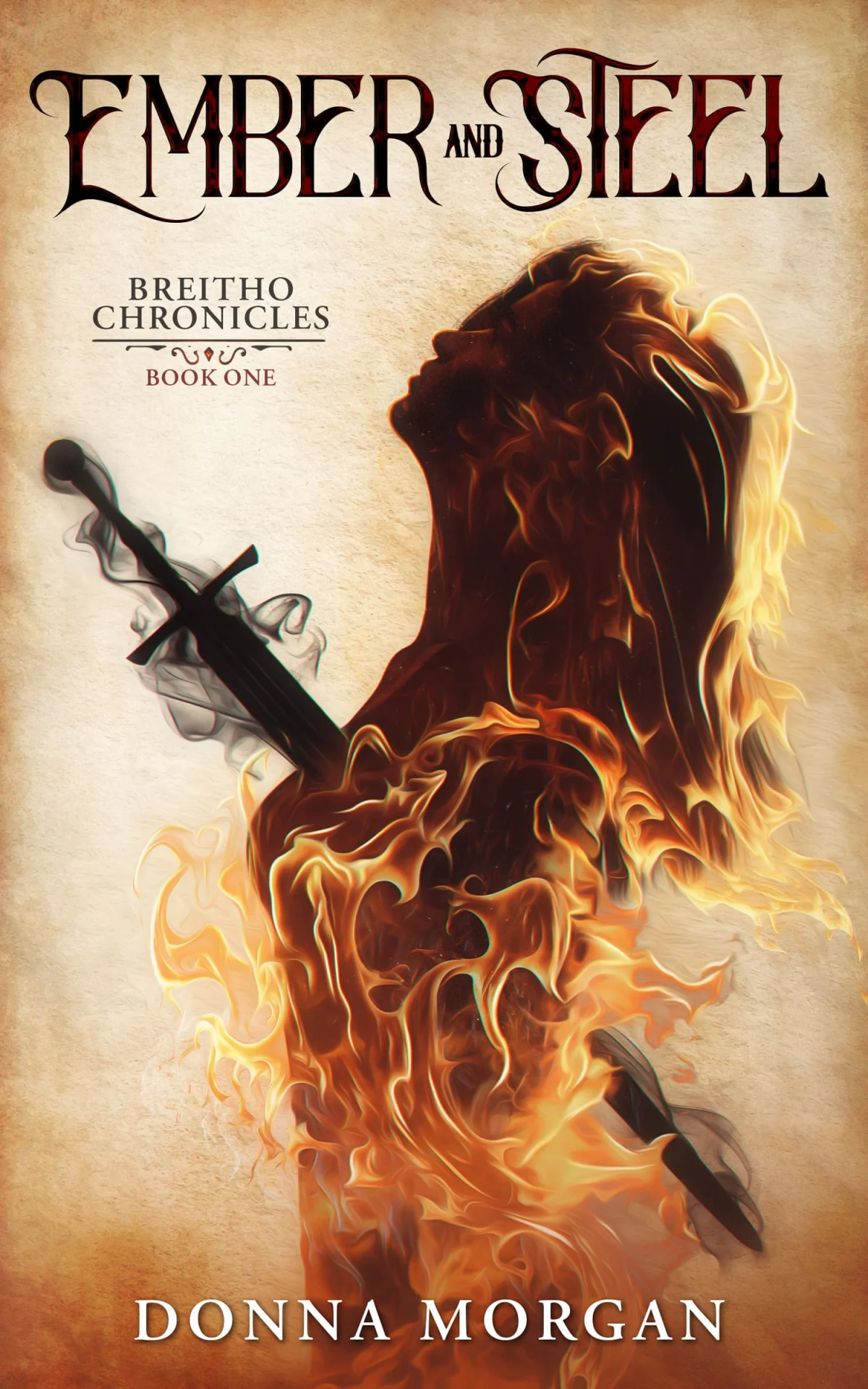
Donna Morgan’s Ember and Steel pairs a neurodivergent heroine and ancient fire magic with court tension, a patient romance and unsettling dark fantasy.
Rating: /10



Donna Morgan’s Ember and Steel makes its strongest impression through Sarah Brandt: a stubborn, loyal woman whose neurodivergence shapes how she moves through a world inclined to judge her. The novel sets her personal fight to survive alongside a widening supernatural threat, then lets dark fantasy, romance and found-family warmth share the story. For this reviewer, that mix works because Sarah’s voice gives the grand stakes a distinctly human center.
A flight from the village leads to ancient fire
Sarah’s life changes after she witnesses her only friend’s murder. Fleeing her small village, she nearly dies in a bog before a knight and his companions rescue her: Gwith, a knight commander; Caz, a sharp-tongued archer; and a wolf-shifter knight. Her escape takes her to a circle of Druid stones, where she encounters an ancient, burning presence. That contact awakens a power tied to a danger much larger than her own pursuit of justice.
Beyond Sarah’s immediate ordeal, settlements in the north have been attacked, and the dead do not seem to stay at rest. Mages and scholars search for an explanation while the church holds to a prophecy about the gods’ return. A figure named Moriga, an ancient elf whose perspective reaches across centuries, is working to revive a dark god and unleash death magic. The synopsis makes clear that the people seeking answers don’t yet grasp the full scale of what’s at stake.
The reviewer describes the book’s tension as coming from the collision of these threads: Sarah learning what the fire within her means, the threat gathering around the old gods, and the danger posed by masked clergy who hunt magic. The result, in their telling, is darker and creepier than the romance-forward premise might suggest. The threat adds weight to Sarah’s journey without displacing its personal questions about trust, belonging and whether she can meet the demands placed on her.
Sarah’s voice anchors the court and the road
The reviewer singles out Morgan’s first-person writing for how closely it brings readers into Sarah’s perspective. Sarah is in her thirties, and her neurodivergence draws side-eye or contempt in her society. At the duke’s castle, that social pressure becomes a source of friction: she questions whether she belongs there, while her loyalty and stubbornness keep her from simply accepting the judgments around her. Court intrigue gives those moments a sharper edge before she leaves to learn about her magic from the Druids.
Sarah’s inner commentary is also a major part of the pleasure. The reviewer enjoys the moments when she gives snooty figures the blunt response a reader may be wishing someone would deliver. That humor doesn’t erase the discomfort of being treated as an outsider; it lets Sarah answer it in her own terms. Her characterization gives the fantasy’s larger conflict a personal measure: the reader is following not just a person with extraordinary power, but someone still negotiating how others see her and what she believes she can do.
The journey introduces a lively supporting cast, from the companions who first help Sarah to the people she meets in bogs and dark underground tunnels. The reviewer finds these characters believable and especially enjoys the banter among Gwith’s friends, who gradually become part of Sarah’s found family. Druids and their dragons add another distinctive element, while an enigmatic older aunt at the duke’s castle brings a further point of interest. There’s even a giant snake scholar, a detail the reviewer calls out with evident delight.
A patient romance amid a darker fantasy
Readers arriving for romance may appreciate that Sarah and Gwith’s relationship develops slowly. Sarah approaches the possibility with trepidation, and the reviewer finds the gradual build natural. Gwith is presented as a loyal knight rather than a brooding or relentlessly witty romantic lead; the sharper humor belongs to Caz. His tragic history is part of his character, but his defining quality here is his commitment to those around him.
That steadiness gives the romance room to grow alongside Sarah’s other concerns. The reviewer’s enthusiasm comes in part from the way Gwith’s circle becomes Sarah’s circle, with affectionate teasing and camaraderie helping the new relationships feel lived in. The romantic thread sits beside the dangers and magical discoveries instead of taking over the premise.
The book also shifts between Sarah’s first-person narration and Moriga’s third-person perspective. The reviewer says the change feels smooth, offering a useful window into the centuries of events behind the present crisis. That wider view lends the threat a longer history, while Sarah’s account stays close to the choices and encounters shaping her immediate journey. Morgan’s world, in the reviewer’s assessment, feels deep and inhabited, with its different magical and social corners contributing to a coherent sense of place.
The reviewer had a lot of fun with Ember and Steel and is eager to see where the second book takes Sarah. They recommend it to readers looking for dark fantasy romance, strong character work and a found family built through banter and shared danger. Sarah’s developing connection to the fire god is another thread to follow: what begins as an encounter with something mysterious becomes a relationship that grows as the two learn more about each other. Between that bond, the looming return of the dark god and Sarah’s new companions, the first book leaves plenty of story in motion.